


After nearly a decade of back and forth negotiations, the Chinese government has finally agreed to pay for the overhaul of the 1800 kilometre single-track Tanzania-Zambia railway (TAZARA) line. No financial details have been revealed, but feasibility studies are already completed.
Chief witnesses to the signing of an initial agreement on the sidelines of the recently concluded China-Africa Summit in Beijing, were Presidents, Xi Jinping, President Samia Suluhu Hassan of Tanzania and President Hakainde Hichilema of Zambia.
Years of under-investment and neglect, has resulted in the railway suffering from poor maintenance and operational inefficiencies, leading to a decline in market share and utilization. In February 2024, the China Civil Engineering Construction Corporation (CCECC) submitted a proposal for the upgrading of TAZARA to standard gauge, as well as for a concession to operate the line.
TAZARA was built by the Chinese nearly 50 years as a show of solidarity with the so-called frontline states intent on dismantling the Apartheid regime in South Africa. TAZARA made it possible for Zambia to ferry its copper exports through this alternative route and halt dependency on South African ports.
Completion of the works will see the revitalization of the railway line from the port of Dar Es Salaam to Zambia’s copper belt at Kapiri-Mposhi town. China completed the construction of TAZARA in 1976. However, due to years of under-investment and neglect, the railway suffered from poor maintenance and operational inefficiencies, leading to a decline in market share and utilization.
With China’s agreement to invest in the project, Dar Es Salaam port management can step up efforts to become a key hub for Zambian copper exports. Chinese companies have been making large investments in Zambia’s copper-belt, as the global race for electrical vehicle dominance intensifies.
A new private company will be incorporated in Uganda to refine graphite for use in electric batteries, Blencowe Resources, the developer of the Orom Cross graphite project in the northern Uganda district of Kitgum, has announced.
The announcement came after Blencowe Resources signed a memorandum of understanding for the creation of a Joint Venture with a company from Singapore, Triessence Limited, to put up the first graphite beneficiation facility in Uganda, near the Orom Cross project.
Graphite is listed as a critical mineral that forms part of the metals needed for the manufacturing of electric batteries. According to a statement from Blencowe, “This venture will set Blencowe apart from competitors focused solely on producing graphite concentrate and provides a life-of-mine offtake partner near the Orom-Cross Project, offering significant additional commercial advantages. With this JV, Blencowe has strategically aligned with two highly experienced Asian graphite specialists to ensure successful delivery.”
Blencowe said the joint venture (JV) allows it to bring in top industry experts to its Uganda project, share risk, and create value. Blencowe says a tonne of graphite processed to more than 99 per cent fetches $2,000 today, compared to the $500 per tonne for the 96 per cent concentrate.
Plans to put up a beneficiation facility offer some guidance on Blencowe’s possible next course of action when it finally starts to produce graphite. There have been questions as to what will happen when production of graphite starts, considering Uganda has banned the export of raw materials.
The ban has stifled exploration capital in the country’s young mining industry and seen an exodus of wildcat firms to more conducive jurisdictions. Blencowe’s executive chairman, Cameron Pearce, in a statement, said: “Blencowe has long recognised the substantial advantages downstream upgrading of graphite in-country can offer and securing experienced partners who have the expertise to help us deliver successful [refined raw material] production was essential. I am delighted to say that this MOU is another significant milestone in enhancing both the value and distinctiveness for our company.”
Last week, Blencowe announced that it had delivered tonnes of processed graphite, which had been shipped out of Uganda earlier this year for testing, to potential clients in Japan, South Korea and China for assessment. The company, which hopes to get feedback from these clients in early October, is confident that its product, which was refined to more than 99 per cent in a facility in China, will pass the test.
According to the terms of the MOU with Triessence, the two companies will each hold a 50 per cent stake in the joint venture company. Blencowe will retain full ownership of the Orom-Cross project, though. However, Uganda’s new mining law allows for the government to take up to 15 per cent shareholding in a mining project of its choice.
Triessence Limited has agreed to fund 50 per cent of the construction of the beneficiation facility. The company also agreed to purchase all end product of the first products that will be refined in China, and oversee the sale of different finished products to the international market.
Blencowe is currently undertaking a Definitive Feasibility Study (DFS) for its Orom-Cross project. The study, which is expected to be completed in the first quarter of 2025, will be used to attract investment capital into the project. Blencowe says it needs initial capital of at least $62 million.
Now, according to the MOU that Blencowe has signed with Triessence, the DFS for the proposed beneficiation facility will be integrated into the Orom-Cross DFS for what the company says will be a comprehensive development strategy.
If Blencowe achieves its goal of putting up a beneficiation plant in Kitgum, it will be the second such plant for a critical mineral in Uganda. In April, President Yoweri Museveni officially commissioned Woodcross Tin Smelting plant in Mbarara district.
However, while Woodcross has struggled to get enough raw supplies to meet the capacity of its tin processing plant, Blencowe appears well positioned not to have such issues as the company gets closer to production at its Orom-Cross project.
The Uganda Electricity Distribution Company Limited (UEDCL) has officially applied to the Electricity Regulatory Authority (ERA) for two different licenses that Umeme Ltd held, taking government a step closer to repossessing all the assets it once possessed before it leased them out to private investors 23 years ago.
In a notice, ERA said: “The license applications by UEDCL are with respect to the distribution area currently operated by Umeme Limited, and applicable for the period after the expected natural end of the Umeme Limited distribution and supply of electricity concession, and the respective licenses.”
In December 2022, the ministry of Energy and Mineral Development announced plans to create the Uganda National Electricity Company Limited (UNECL) to take over the generation, transmission and distribution of electricity after the government decided against renewing the concessionary contracts of Eskom and Umeme.
The licenses that UEDCL has applied for are to do with the distribution of electricity and supply of electricity. If granted, the licenses will take effect after the expiry of Umeme’s 20-year concession.
Umeme’s concession expires at the end of March 2025. The company covers nearly 95 per cent of Uganda’s electricity distribution network. The company, which is listed on the Uganda Securities Exchange, says it has invested more than $500 million in Uganda’s distribution network.
Umeme had earlier estimated that Uganda will need an investment capital of $120 million per year until 2031 within its distribution network to meet the growing amount of electricity dispatch.
According to Uganda’s overly ambitious Vision 2040, the country is estimated to generate more than 40,000MW of electricity over different sources of energy such as hydro, nuclear, solar and biomass, just to mention a few.
STATEMENT FROM THE CHAIRPERSON, PPDA BOARD OF DIRECTORS
The Public Procurement and Disposal of Public Assets Authority, (PPDA), was set up following the enactment of the Public Procurement and Disposal of Public Assets Authority Act in 2003.
According to the Act, the PPDA is the principal regulatory body for public procurement and disposal of public assets in Uganda. The PPDA Act has since undergone amendments, the latest being in 2021, to align it with emerging trends in the
public procurement and disposal arena.
The amendments have also introduced several prominent changes that strengthen and enhance the role of the PPDA in the execution of its regulatory function.
The roles of the PPDA, as per the provisions of Section 6 of the PPDA Act, 2003, are to:
Ensure the application of fair, competitive, transparent, nondiscriminatory and value for money procurement and disposal standards and practices;
Advise Government, local governments and other procuring and disposing entities on procurement and disposal policies, systems and practices and where necessary, on their harmonization;
PPDA CLIENTS’ CHARTER 01
Set standards for the public procurement and disposal systems in Uganda;
Monitor compliance of procuring and disposing entities; and Build procurement and disposal capacity in Uganda.
To achieve the objectives above, the Authority has developed this Clients’ Charter which specifies service delivery commitments and standards against which our performance will be measured. The Charter provides the Authority staff with clear standards to strive for, for effective service delivery to our stakeholders.
This Charter also contributes to the realization of the undertakings in the Authority Strategic Plan, 2020/21 – 2024/25.
The PPDA Strategic Plan is anchored on four strategic objectives, to wit:
Strengthening Regulation of the Public Procurement and Asset Disposal System;
Enhancing Stakeholder Engagement and Management;
Strengthening Institutional and Management Capacity; and Leveraging Technology to Deliver Efficiency in Public Procurement.
I therefore, call upon all our clients to internalize the provisions of this Charter to challenge us to ensure that our services meet your expectations.
Julius K Ishungisa
CHAIRMAN BOARD OF DIRECTORS
FOREWORD
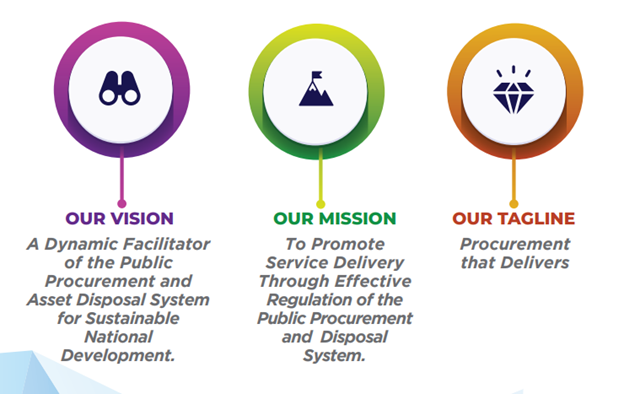
The PPDA, in its mission statement, undertakes to promote service delivery through effective regulation of the
public procurement and disposal system. The main thrust of this mission is, service delivery through public
procurement. The PPDA is expected, as per its stated mission, to facilitate the socio-economic provision of goods and
services such as roads, schools, and hospitals for national development.
As we may all be aware, public procurement is very significant in realizing our national development aspirations. This is because, every year, up to 60% of our national budget is spent through public procurement processes. Therefore, public
procurement and disposal processes are very vital, not just for the contractors and the government agencies, but also for the general public who get involved across the value chain. An ordinary Ugandan who is not necessarily involved in bidding for government contracts, should, and must, be interested in public procurement because it is about service delivery. Effective and efficient public procurement and disposal processes automatically translate into effective and efficient service delivery.
The PPDA has thus developed this Clients’ Charter to provide a framework for defining our service delivery standards in order to improve the public procurement and disposal systems in Uganda.
The objectives of this charter are:
To inform our clients and stakeholders of the services offered by the PPDA;
To create awareness to our stakeholders on their rights and obligations; and
To provide an accountability framework for the PPDA to its stakeholders.
It will also act as a tool for monitoring and evaluating performance
It will also help the PPDA to fulfill its mandate and identify and address gaps in the service delivery with a view of providing
satisfactory service to all our stakeholders.
I wish to thank all our internal and external stakeholders, especially the Corporate and Public Affairs unit, Management of the Authority and the Board of Directors who participated in the development of this Charter.
I call upon all our staff to sustain commitments herein as we soldier on, to meet the commitments of the Authority’s Strategic Plan 2020/21 – 2024/25.
Benson Turamye
Executive Director, PPDA
PPDA CLIENTS’ CHARTER
This Charter outlines our commitment to provide quality services to all our stakeholders. It provides information on what we do and the standards of service you can expect from us.
This Charter is essentially about PPDA’s relationship with its stakeholders in ensuring that:
a) A customer focus is created and maintained.
b) Effective communication exists between PPDA staff and all stakeholders.
c) A level of service above certain pre-set limits is maintained.
d) The range of products and service delivery is appropriate for stakeholders’ needs.

CORE VALUES

Who are Our Clients?
• The Providers, at times known as Suppliers, Contractors or Service Providers
• The Procuring and disposing entities (PDEs) or Government Ministries, Departments and Agencies, (MDAs).
• The Civil Society Organizations (CSOs) • The General Public
PPDA External clients Charter
For more download the charter.
https://www.ppda.go.ug/download/media/media/clients-charter-print-version_compressed.pdf
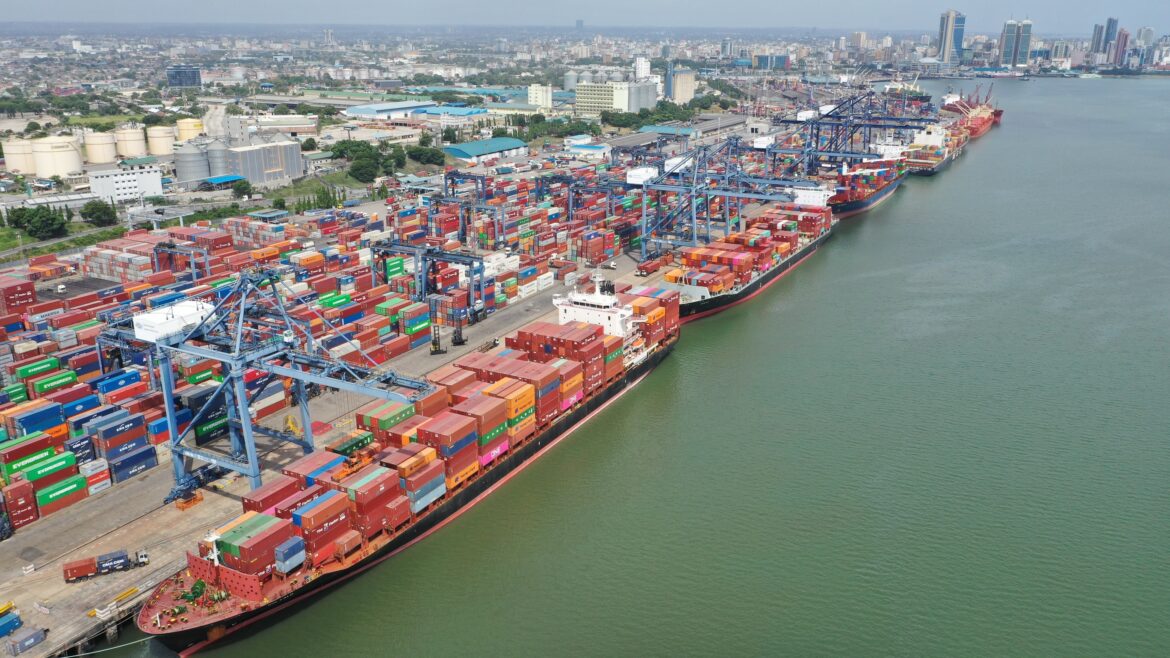
The government of Tanzania through the Tanzania Port Authority (TPA) will build a new and modern pier with a length of 500 meters in its mother port of Dar es Salaam.
The construction of the pier, which will be pier number 12-15, is a continuation of the Government’s strategic plan to improve infrastructure and services in the port. Speaking during the visit of the Zanzibar Port Authority Board, led by the Chairman of the Board, Mr. Joseph Meza, on behalf of the Director General, Director of Planning, Quality and Risk, Dr. Boniphace Nobeji said that the plan is currently in the feasibility study stage.
“Currently we are in the stage of completing the feasibility study and detailed design of the construction of the new pier number 12-15 in DSM Port,” said Dr. Nobeji on behalf of the Director General of TPA. Dr. Nobeji said that the piers to serve Makasha are estimated to increase the capacity of the DSM Port to serve Makasha by 2.5 million TEUs per year, by the year 2047.
In addition to the construction, TPA has already found a contractor to build a Jetty and Oil Storage Tanks in the Port. “To begin with, a pier and 17 tanks will be built with the capacity to receive and store up to 362,500 tons of oil at the same time,” he said.
The completion of this project, he said, will increase the efficiency of the DSM Port to serve oil tankers and reduce the costs and challenges that are currently arising due to the delay of oil tankers.
Through the Dar es Salaam Port improvement project (DMGP), the Government through the TPA has made improvements to pier number 1-7 and a special pier for servicing vehicles ie RoRo.
DSM Port serves approximately 90 percent of the entire Tanzanian market, while in terms of international trade, this Port serves 95 percent of all cargo compared to all Ports in the country.
DSM Port serves other countries in the East and Central Africa region such as; Malawi, Zambia, DR Congo, Burundi, Rwanda and Uganda.
Recently, the country of South Sudan has also shown interest in using the DSM Port. In terms of market size, this Port serves an area of approximately 700 million people.
KPA has acquired an additional four Rubber Tyred Gantry Cranes (RTGs) worth USD 8.5 million in the ongoing equipment upgrading and modernization programme.
The four cranes built on advanced technology have a Safe Working Load capacity of 45 tons, wheel span of 24 Meters, and engine drive capacity that consumes less fuel. They are manufactured by the Shanghai Zhenua Heavy Industries `company ZPMC).
They were discharged at the second container terminal and are awaiting commissioning.
The arrival of the new cranes will boost efficiency on cargo dwell time and subsequently improve vessel turnaround.
Last year, KPA acquired four modern Ship to Shore Gantry cranes mounted with spreaders that can handle two containers per move, making the port competitive in the region.
KPA Managing Director Captain William Ruto has attributed impressive port performance to the expansion of key berths and the acquisition of state-of-the-art equipment.
The Port of Mombasa is projected to handle 1.8 million TEUs by the end of the year 2024.
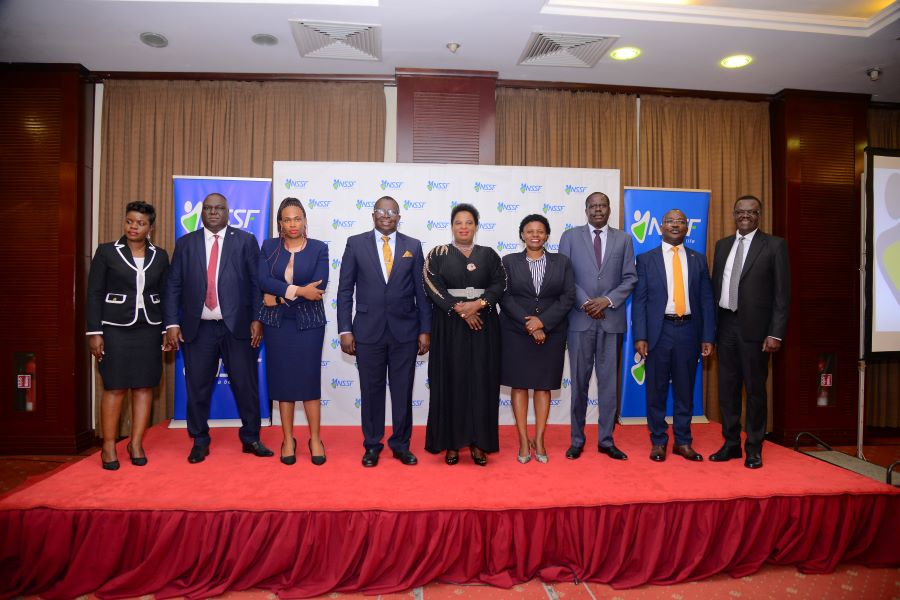
The Minister of Gender, Labour, and Social Development Betty Amongi has appointed a new Board of Directors for the National Social Security Fund (NSSF) for a 3-year term effective September 01, 2024.
Dr. David Ogong has been appointed the new Chairperson, replacing Dr Peter Kimbowa whose 3-year tenure elapsed on September 01, 2024.
The Permanent Secretary and Secretary to the Treasury Ramathan Ggoobi also joins the Board,
replacing Patrick Ocailap while Richard Bigirwa also joins as a workers’ representative under the National Organization of Trade Unions (NOTU), replacing Lwabayi Mudiba Hassan.
The Minister also reappointed Aggrey David Kibenge representing the Ministry of Gender, Labour and Social Development.
Dr. Eng Silver Mugisha and Annet Mulindwa Nakawunde have also been re-appointed and will represent employers under the Federation of Uganda Employers (FUE).
Other appointees are Dr. Sam Lyomoki and Penninah Tukamwesiga representing workers under the Confederation of Free Trade Unions (COFTU), and Annet Birungi, also representing workers under the National Organization of Trade Unions (NOTU).
Patrick Ayota, the NSSF Managing Director will continue to serve as an executive member of the Board.
Addressing the new Board at an inauguration ceremony, the Minister of Gender, Labour, and Social Development challenged them to adhere to corporate governance principles and ensure the growth and profitability of the Fund.
“I would like you to pay attention to Section 4 (4) of the NSSF Act, which says that “the Board shall ensure that there is secure, profitable and effective financial management of the Fund for the benefit of the workers and the country at large. It is now your responsibility to keep the tradition of excellence that the Fund has enjoyed over the years,” she said.
Speaking about his appointment, Dr. Ogong pledged to ensure that the track record of exemplary performance of the Fund over the years is maintained.
“It is a privilege I take seriously. NSSF holds members’ savings in trust and indeed it is a major obligation to ensure that this trust is kept and maintained. I believe we do that by providing the necessary oversight that ensures that the Fund keeps members’ funds safe even as it grows,” he said.
Dr.Ogong added that he will lead with teamwork to ensure that the Fund meets the challenges ahead but also takes advantage of the immense opportunities.
“I have had an opportunity to familiarize myself with Vision 2035. Working together the Board and management of the fund, I commit to ensuring that the long-term strategies of the Fund are achieved,” he added.
NSSF Managing Director Patrick Ayota welcomed the new appointments and re-appointment of the board members.
“The newly appointed members will bring immense experience, while the re-appointed members of the board ensure that there is continuity and a smooth transition from the 12th to the 13th Board,” Ayota said.
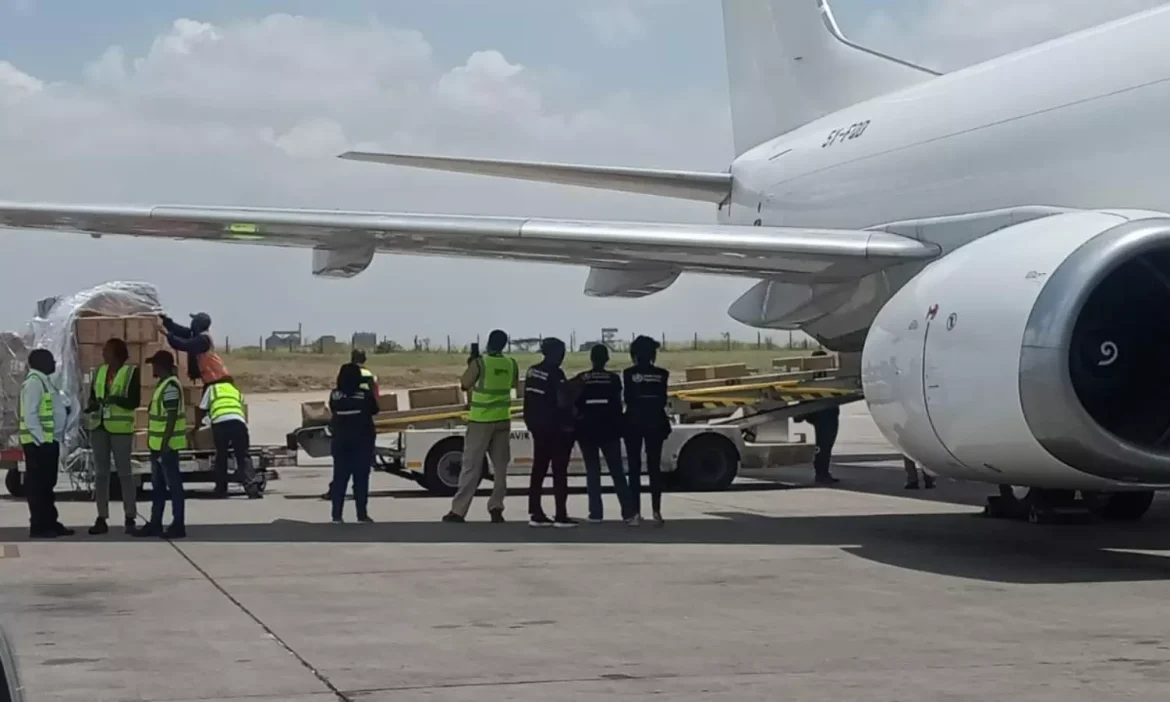
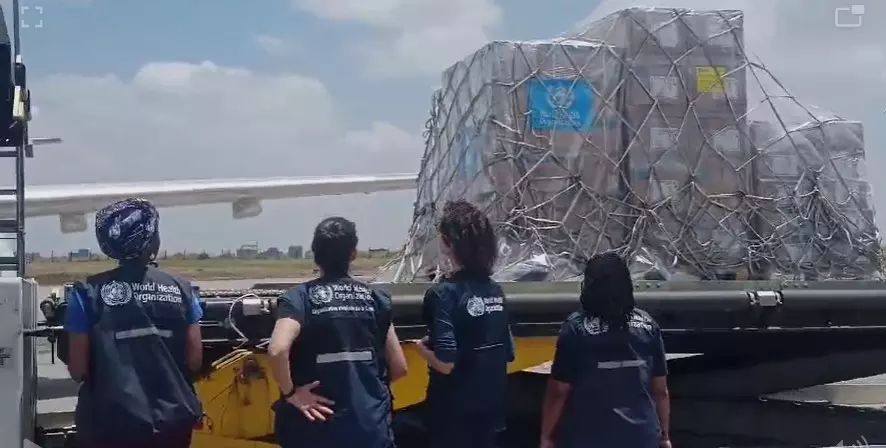
Astral Aviation delivered 14 tonnes of emergency supplies for MPox response in DR Congo, in collaboration with World Health Organisation (WHO) and Kuehne+Nagel. “The medical supplies and equipment will cater to 16,800 people over three months, ensuring essential care for healthcare workers in the fight against MPox,” Sanjeev Gadhia, Founder & CEO, Astral Aviation posted on LinkedIn.
The delivery marks the first of many to the DRC in the upcoming weeks, showcasing Astral’s commitment to emergency response efforts, Gadhia added. “The flight, operated on the Boeing 737 400F, reflects Astral’s dedication to timely and efficient delivery of critical supplies.” Matshidiso Moeti, Regional Director, Africa WHO adds: “These supplies will ensure health facilities have the critical items needed to provide safe and optimal care to patients, contributing to the ongoing emergency response by the health authorities with support from WHO and other partners.
Since the start of 2024, the DRC has reported 21,153 suspected MPox cases, including 692 deaths, according to Josaphat Sikoti, head of the DRC national MPox response committee.

Uganda’s drive to harness its abundant renewable energy resources took center stage at the Wuxi conference in China, where Minister Evelyn Anite engaged high-profile Chinese energy firms.
Anite outlined Uganda’s plan to achieve universal electrification by 2030, a goal that requires significant investment in solar, hydropower, and wind energy.
The Minister stressed that Uganda offers unique opportunities for investors in clean renewable energy, given its vast natural resources and favorable investment climate.
“Uganda’s potential in clean energy is enormous, and we are inviting Chinese investors to be part of this transformation. By partnering with us, Chinese energy firms can help us achieve our electrification targets while also benefiting from high returns and guaranteed markets,” Anite emphasized.
Uganda is currently generating over 1,300 MW of electricity, with an additional 1,000 MW potential in large hydropower projects like the Karuma Dam, alongside vast solar opportunities in regions with high sunshine exposure.
Minister Anite noted that Uganda’s energy demand is growing at 9% per year, driven by rapid urbanization and industrial expansion.
For Chinese investors, the renewable energy sector offers a unique opportunity to enter one of Africa’s fastest-growing markets while contributing to global carbon reduction efforts.
Uganda’s government provides favorable tariffs, long-term power purchase agreements, and zero import duties on equipment, making it an attractive destination for clean energy investments.
Anite emphasizED that the partnership between Uganda and Chinese firms could serve as a model for Africa’s energy transition.
ICT
With Uganda positioning itself as a future leader in digital infrastructure, Minister Evelyn Anite courted Chinese investors to support the nation’s ambitious ICT plans.
Speaking at the Wuxi conference, Anite made a compelling case for investment in Uganda’s telecommunications sector, which is poised for explosive growth in the coming years.
“Uganda’s digital economy is expanding rapidly, and we need substantial investment in telecommunications infrastructure to ensure that everyone, from our capital cities to the most rural areas, is connected,” Anite told an audience of top-tier Chinese telecommunications firms.
With over 70% mobile penetration and growing demand for internet access, Uganda’s ICT sector presents a lucrative opportunity for Chinese investors to provide the infrastructure that will support the country’s future digital economy.
Anite highlighted the Ugandan government’s focus on building a modern, inclusive telecom infrastructure that supports e-commerce, e-governance, and financial inclusion, especially in rural areas.
Currently, only 26% of Uganda’s population has internet access, leaving a significant gap that Chinese firms could help fill. Uganda is targeting a 50% increase in mobile broadband coverage by 2025, and Chinese companies are well-positioned to contribute to this growth.
For investors, the opportunities are immense.
Uganda’s government is offering tax holidays, expedited licenses for new infrastructure projects, and favorable regulations for foreign telecom companies.
Anite noted that Chinese firms, already global leaders in telecommunications technology, could achieve significant market share in Uganda’s growing digital economy while bringing affordable internet and mobile services to millions of Ugandans.
Zhang Wuxu, the General Manager of Iflytek, stated during a similar partnership, “Innovation in Africa will reshape the future, and it begins with the right investments in people and technology.”
“With the support of visionary leadership like yours, we are confident that our investments will help advance in ways that uplift communities, create jobs, and pave the way for long-term prosperity. We look forward to building this bright future together.”
Tourism
She also highlighted the immense potential of Uganda’s tourism sector and called on Chinese investors to explore untapped opportunities in one of Africa’s most breathtaking destinations.
Known as the “Pearl of Africa,” Uganda offers rich wildlife, cultural heritage, and natural beauty that attracts over 1.5 million tourists annually—a number the government plans to increase significantly with the right investments.
“Uganda is home to rare and unique attractions such as the endangered mountain gorillas, the world’s longest river—the Nile—and some of Africa’s most beautiful national parks. We are inviting Chinese investors to help us elevate our tourism sector by developing world-class resorts, eco-friendly lodges, and adventure tourism experiences,” Anite told the audience.
The tourism sector, which contributed over $1.6 billion to Uganda’s GDP pre-pandemic, is a major priority for the government as it looks to diversify its economy.
Anite stressed that Uganda’s unique combination of natural wonders and its status as a safe and welcoming country for tourists make it an ideal investment destination for Chinese companies looking to expand into Africa’s booming tourism industry.
She said Chinese investors can benefit from Uganda’s strategic tourism locations, tax exemptions on hotel construction, and government-backed initiatives to boost tourist arrivals from Asia, including China.
Uganda offers investors prime land near its national parks and tourism corridors, and investors will also benefit from Uganda’s growing appeal to eco-conscious travelers.