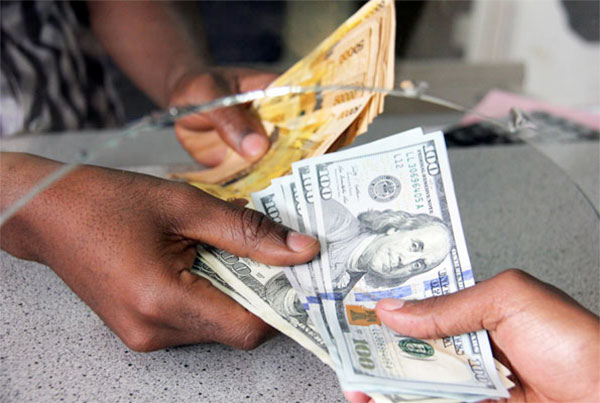
The local unit was relatively weak during the week, with dollar demand from offshore investors, energy and manufacturing firms outstripping existing supply from commodity exporters and remittance firms.
Commercial News
Stanbic Bank Uganda to provide full financing for Ugandans seeking to purchase residential houses
Ugandans hoping to live under their own roof and end renting have a new opportunity to do so with 100% financing from Stanbic Bank, courtesy of a new lending campaign dubbed “Oli Sorted” launched last week.
The 90-day campaign which targets the back-to-school season also enabled parents to borrow up to Shs 350 million in unsecured personal loans from Stanbic Bank, to support them pay school fees and other attendant expenses.
Speaking to the media this morning, Israel Arinaitwe, the head of Personal Banking at Stanbic Bank said the campaign is a timely response to address the needs of customers who require financing different aspirations in life.
“We are simply responding to what we hear and see from the feedback of our customers—they are tired of renting, they want to get more money, but they also want longer repayment tenures; so, we are responding in the affirmative through this campaign,” said Arinaitwe.
The campaign also covers the needs of business customers—those owning small and medium enterprises and seeking capital to restock or expand, according to Aaron Akampa, the head of Enterprise Banking at Stanbic Bank.
“Small and medium enterprises are the lifeblood of our economy—they employ millions and support the livelihoods of thousands of Ugandans. And they have been asking us to do more for and with them—they want access to quicker credit, they want to borrow at lower rates and safer options from moneylenders—Oli Sorted campaign is our response, and we invite all small businesses across the country to
visit any of our branches to get more information on how we can support them to grow their businesses,” said Akampa.
Both retail and business customers seeking credit in the next 90 days will benefit from the promotion offer of zero arrangement fees which means they get exactly what they apply for, without losing money in form of administrative processing fees often charged by banks.
“First of all, we are increasing the given under the previous campaign, to Shs 350 million in unsecured loans—we will not charge arrangement fees, and our decision will be given within 48hrs ensuring that no time is wasted,” said Salim Kitagenda, the head of Products at Stanbic Bank.
Kitagenda said while the Oli Sorted campaign targets Ugandans banking with Stanbic, customers currently working with other banks can be assisted to quickly open accounts with Stanbic and even transfer any loans with other banks and get to benefit from attractive offers.
SCHOOLS ARE SORTED
The campaign also targets schools— with parents who pay school fees through Stanbic agents and other channels such as FlexiPay standing a chance to win back up to Shs 500, 000 in cash back. Agents who process the most school fees payment transactions will also stand a chance to have their rent by the bank.
School administrators can also secure up to Shs 3 billion in operating capital to restock or construct new premises. Albert Yiga, the head of Education Sector Banking, said the campaign also comes with a variety of rewards for head teachers, bursars, school directors, parents, and teachers and Stanbic Agents.
The Cash-Back campaign has three broad brackets with rewards of insurance cover, school fees and rent refunds for agents. During the campaign, 45 schools will be awarded with insurance policies, numbering 90 in total.
“During the campaign, a total of 120 parents or students are potential winners. All they need to do is pay school fees through Stanbic platforms specifically FlexiPay, Schoolpay or through Stanbic agents to be considered eligible,” said Yiga.
In Category One (the top tier), schools that grow from the previous cycle average monthly collections by average balances of Shs 500 million (an equivalent of at least Shs 1.8 billion in collections) will win three policies (Head Teacher, School Director, and School Bursar.)
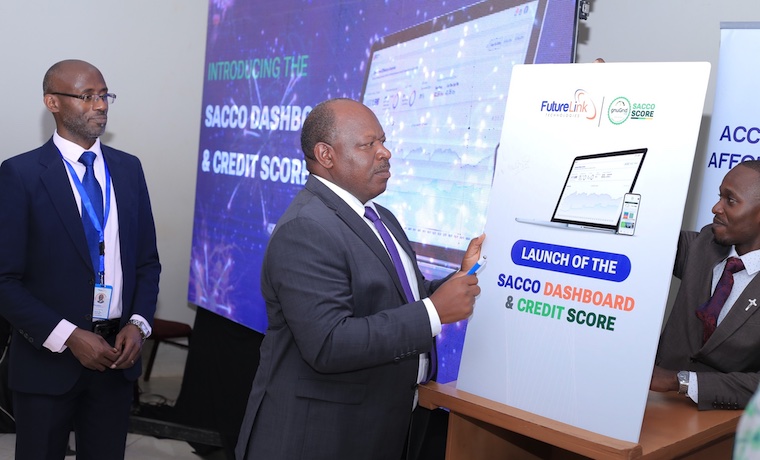
Fintech Uganda: FutureLink introduces Sacco dashboard to ease lending in Uganda
Kamwokya-based FutureLink Technologies last week launched the first-ever Sacco Industry Dashboard and Credit Score in Uganda.
The automated dashboard enables a Sacco or microfinance Institution to perfect its growth strategies and create new relevant financial products, by leveraging real-time comparative data from the industry.
On the other hand, the Sacco Credit Score is a tool developed to facilitate quick lending decision-making for Saccos and microfinance institutions.
Speaking at the launch ceremony on May 24 at the Grand Global hotel in Makerere, the founder and chief executive officer of FutureLink Technologies, Vincent Tumwijukye stated: “The Sacco Industry dashboard will accelerate the creation of more relevant and affordable financial services for our people, promote fair pricing, and build a sustainable and inclusive financial system in Uganda”
Richard Byarugaba, the executive director finance, Bank of Uganda, said; “I have learnt that the Sacco dashboard enables real-time industry comparison while preserving the data privacy and integrity of each institution and individual. Bank of Uganda supports such innovations that stimulate access and usage of formal financial services.”
On her part, the executive director of Uganda Microfinance Regulatory Authority (UMRA) Dr Edith Namugga Tusuubira praised FutureLink Technologies for its commitment to drive the creation of more relevant and affordable financial services.
ABOUT FUTURELINK TECHNOLOGIES
FutureLink Technologies is a community-driven marketplace for financial services that enables the unbanked and underserved customers to access and choose relevant and affordable financial services provided by a growing network of Saccos and microfinance institutions on the Msacco platform.
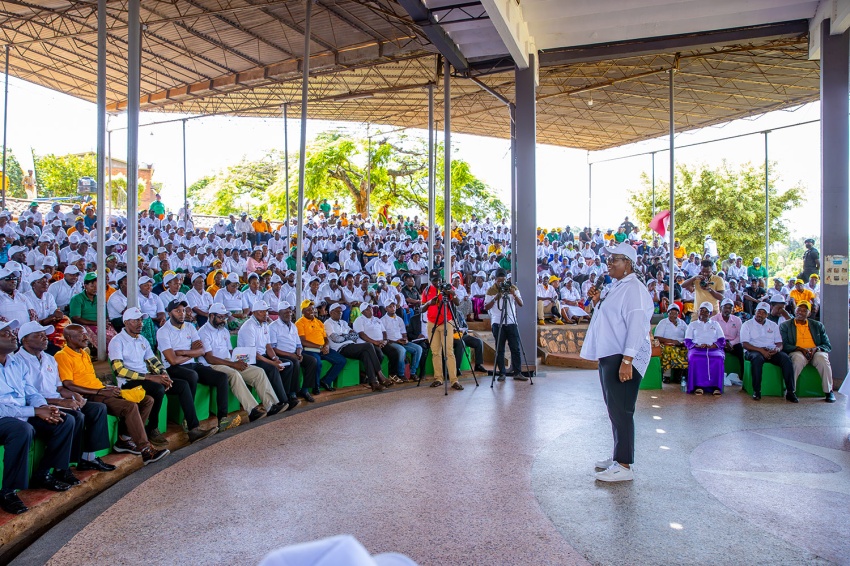
The Kampala Capital City Authority (KCCA) has launched the Kampala Smart City Village Ambassadors Forum, an initiative designed to aid the transformation Kampala into a modern, efficient metropolis.
Themed “Promoting the Smart City Agenda for Effective Service Delivery,” the launch event took place at Kitante Primary School on Saturday, marking a significant milestone in encouraging community involvement in the city’s development.
The Smart City Ambassadors are voluntary, patriotic community members drawn from Kampala’s five divisions: Kawempe, Rubaga, Makindye, Nakawa, and Central Division.
These ambassadors represent a novel approach to urban management, emphasizing grassroots involvement and collective responsibility to ensure the provision of quality services across the city.
Dorothy Kisaka, the Executive Director of KCCA, underscored the importance of the Kampala Smart City Village Ambassadors Forum in empowering residents to actively participate in the city’s development.
“Our goal is to transform Kampala into a more efficient, livable, and sustainable city,” Kisaka stated. “With 857 villages in Kampala, these ambassadors will serve as the eyes and ears of KCCA within their communities, maintaining cleanliness, promoting safe neighborhoods, and fostering responsible waste management among others.”
In a passionate call to action, Kisaka urged all residents to embrace the Smart City agenda and become ambassadors of this transformative vision.
“This is a voluntary call. If you want to see the city clean and growing, be a smart city ambassador. We are all building a smart city together,” she emphasized.
Kisaka also highlighted that while this initiative transcends political lines, it aligns with the NRM government’s manifesto for 2021-2026, which aims at transformingKampala and Uganda at large.
Kisaka commended the government for its financial support, which has been crucial in developing the city.
“The government has provided us with more funding to build roads and support various projects within the city,” she noted, emphasizing the need for comprehensive development to meet the needs of Kampala’s growing population.
She stressed the vital role of community participation in realizing the smart city vision, saying, “The city is big, and we need everyone’s involvement.”
Elaborating on the pillars underpinning the smart city concept, Kisaka identified three core areas: Technology, Infrastructure,
PM NABBANJA URGES UTILITY PROVIDERS TO SPEED UP RELOCATIONS FOR KAMPALA ROADS
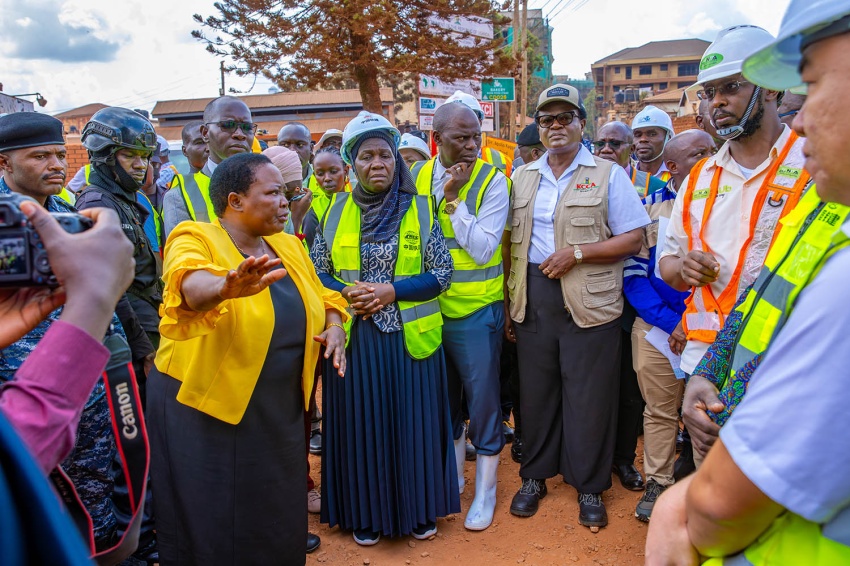
Prime Minister Rt Hon Robinah Nabbanja has issued a stern directive to utility service providers, urging them to expedite the relocation of service lines to ensure the timely completion of vital road construction projects in Kampala
During her Thursday tour, Nabbanja inspected the Kyebando Ring Road in Kawempe Division, as well as 7th Street and 8th Street, identifying critical issues such as right-of-way acquisition and delayed service line relocations as major bottlenecks.
These are some of the roads being constructed under the Kampala City Roads Rehabilitation Project (KCRRP).
Nabbanja called on key utility providers, including Umeme, National Information Technology Authority (NITA-U), National Water and Sewerage Corporation (NWSC), and the Police, to enhance their coordination and speed up the shifting of service lines to prevent further delays.
Expressing frustration with the current pace of progress, Nabbanja demanded immediate action from contractors and consultants.
“Let the contractor start work; we are tired of potholes,” she declared, pledging to closely monitor the situation. “I’m going to start passing here every day. If there are any problems, I want to know about them immediately.”
Highlighting her determination to ensure efficient project completion, Nabbanja announced plans to engage the Ambassador of China.
She criticized the apparent negligence of the consultants, stating, “We feel there is negligence on the side of the consultant. We are tired. We don’t want to waste even one minute. People are suffering.”
Stressing the importance of timely and high-quality execution, Nabbanja warned against any form of sabotage to government efforts.
“When we are given work, let us deliver it. Don’t sabotage government. We want to serve our people. We need quality work and quality roads,” she emphasized.
Following her inspections, Nabbanja convened a meeting with contractors, consultant utility service providers and the Kampala Capital City Authority (KCCA) to address the challenges hindering road construction.
Government Chief Whip Hamson Obua who had accompanied the Prime Minister during the road tours attended the meeting echoed her concerns, proposing subcontracting as a solution to accelerate the work.
“For us, we want to see Kampala roads in good shape. Why don’t you subcontract more so that work moves fast?” he suggested.
The tour and meeting also included the Minister of Kampala Capital City and Metropolitan Affairs, Hajjat Minsa Kabanda, and the State Minister for Kampala, Kabuye Kyofatogabye who acknowledged that the current pace of execution is a significant challenge.
The KCCA Executive Director Dorothy Kisaka, her Deputy Eng David Luyimbazi were also part of the road tours.
Uganda Parliament approves UGX152 Billion for Hoima City Stadium Construction
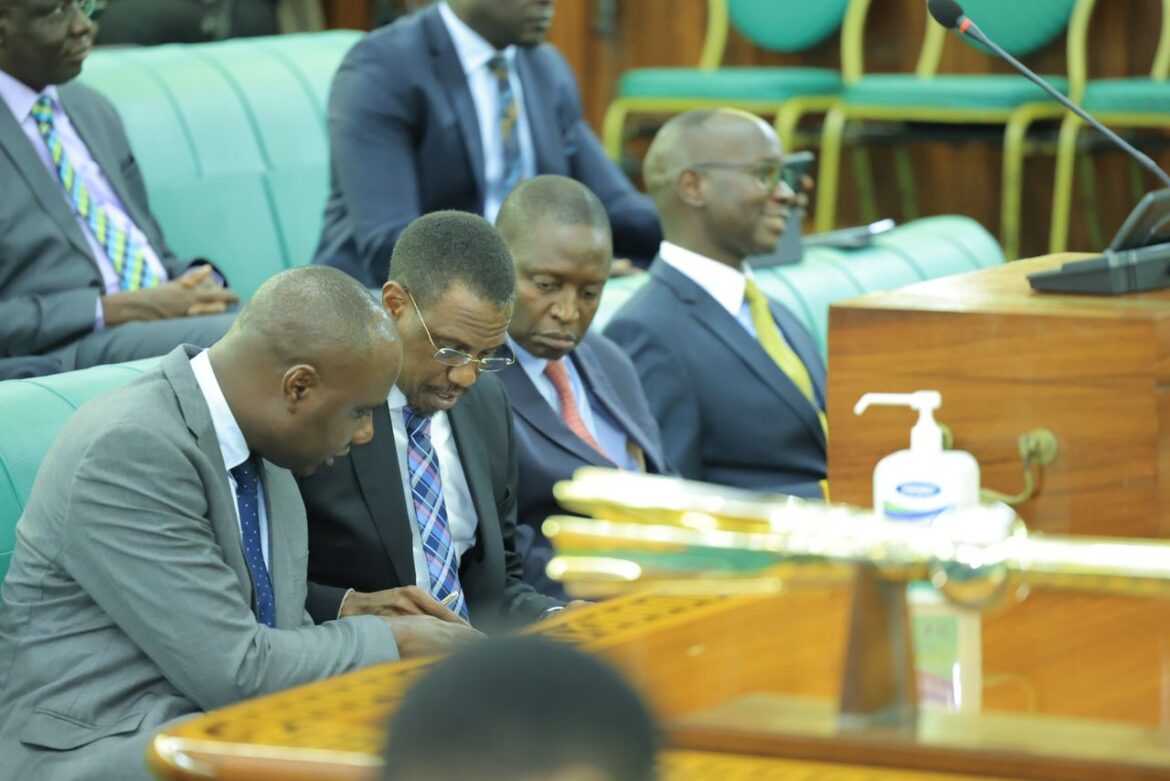
Construction of Hoima City stadium is expected to start after Parliament approved the required Shs152 billion, part of the Shs288.6 billion Supplementary Budget Schedule No.03 on Thursday, 16 May 2024.
ahead of the African Cup of Nations (AFCON) in 2027.
The Supplementary Budget Schedule No. 03 for financial year 2023/2024 was approved by Parliament during plenary sitting chaired by Speaker, Anita Among.
In September 2023, the Confederation of African Football (CAF) awarded hosting rights for the 36th edition of AFCON 2027 to Uganda, Kenya, and Tanzania under the East Africa joint Pamoja Bid. Hoima City stadium is one of the venues expected to host the games.
The Minister of State for Finance, Planning and Economic Development (General Duties), Hon. Henry Musasizi said that the Shs152 billion is advance payment for construction works to commence at Hoima City stadium.
“This funding will enable the contractor commence on construction of the stadium to be ready before the deadline of 31 December 2025 required by CAF for Uganda to co-host the 2027 AFCON,” Musasizi said.
Furthermore, legislators approved Shs132.6 billion to enable Uganda National Oil Company (UNOC) additional equity acquisition in the East African Crude Oil Pipeline (EACOP).
“The funding is to meet the cash call arising from delayed financial flows by financers and is required before July 2024,” said Musasizi.
He justified that the two projects will be funded by the Petroleum Fund, in line with Section 59(3) of the Public Finance Management Act which allows the Ministry of Finance to use the funds to finance infrastructure development.
“Our petroleum fund account currently has Shs400 billion, I propose to utilize Shs284.6 billion in line with the Public Finance Management Act to finance acquisition of equity in EACOP and construction of Hoima City stadium,” Musasizi said.
The lawmakers also approved Shs2.5 billion for Uganda Blood Transfusion Services to facilitate blood collection, processing and distribution for this quarter.
Similarly, Uganda’s Embassy in Geneva was allocated Shs1.4 billion to cater for accumulated dues on rent, salaries, medical insurance and utilities.
“This needs to be settled by end of the financial year to avoid legal action from landlords, service providers and contract staff,” Musasizi said.
He added that Uganda Blood Transfusion Services and the Swedish Embassy budgets will be financed through the savings from the wages after audit of the wage bill.
Kira Municipality Member of Parliament, Hon. Ibrahim Ssemujju, however opposed the supplementary budget, arguing that construction of Hoima stadium does not fall under unforeseeable expenditure as stipulated in Section 25 of the Public Finance Management Act.
“When did you win the bid to host AFCON for you not to have factored in the money in the budget; because this budget that we are going to pass today is a budget that will be implemented in one month. So what is that you cannot wait that is so urgent that you must fix it in the supplementary,” he asked.
Attorney General, Kiryowa Kiwanuka explained that the Ministry of Education and Sports requires him to sign off the contracts to start works at the stadium but he is constrained by lack of evidence of availability of funds.
“If Parliament is happy to wait until the next financial year; the problem is we will lose timelines in as far as deadlines. Unfortunately for me the law does not allow me to approve the contract without knowing the source of funds,” said Kiryowa Kiwanuka.
He also justified the need to finance UNOC, saying that whereas partners in EACOP were required to finance the acquisition of equity, this did not happen.
“Unfortunately because of the change in the world order and economic setting, we have been required to put in the equity, it was not known to us at the time we approved the budget,” Kiryowa Kiwanuka said.
Africa’s Top 10 countries with the best logistics performance.
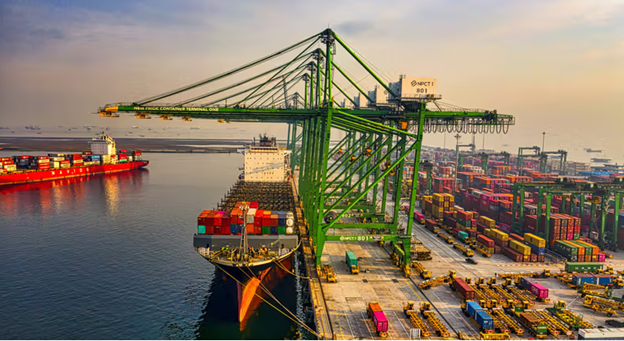
From the shiny cars lining up at the dealership to the countless goodies stacked on supermarket shelves, and even the packages delivered right to our doorsteps, logistics is the invisible force that keeps it all moving. With it, we can get our hands on the things we need and want.
Consider logistics as the lifeblood of the global economy, ensuring that goods and resources move efficiently to where they are needed. Despite its crucial role, this sector still faces various challenges that hinder its growth globally.
In Africa, a continent teeming with a bustling population and abundant natural resources, the movement of goods and people, both within and beyond its borders, encounters obstacles due to inconsistent and often insufficient logistics infrastructure.
However, certain African nations stand at the forefront of the logistics sector when compared to their counterparts.
In 2023, the World Bank released a Logistics Performance Index (LPI) to evaluate how different countries worldwide are faring in terms of logistics. This index assesses six key aspects of logistics performance, including trade- and transport-related infrastructure, the quality of logistics services, and the punctuality of shipments, all rated on a scale of 5.
Here are the top 10 countries in Africa with the best logistics performance:
| Rank | Country | Logistics competence and quality score | LPI score. |
| 1 | South Africa | 3.8 | 3.7 |
| 2 | Egypt | 2.9 | 3.1 |
| 3 | Namibia | 2.9 | 2.9 |
| 4 | Rwanda | 3.0 | 2.8 |
| 5 | Djibouti | 2.8 | 2.7 |
| 6 | Congo, Rep. | 2.9 | 2.6 |
| 7 | Guinea-Bissau | 2.6 | 2.6 |
| 8 | Mali | 2.5 | 2.6 |
| 9 | Nigeria | 2.3 | 2.6 |
| 10 | Algeria | 2.2 | 2.5 |
Uganda Investment Authority launches special-purpose Domestic Investment Division
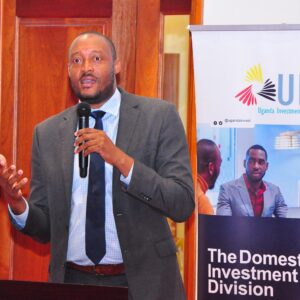
The Uganda Investment Authority (UIA) has launched its Domestic Investment Division (DID), a special-purpose vehicle for promoting and deepening domestic investments in Uganda.
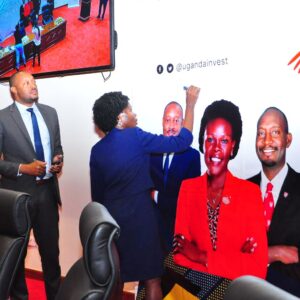
UIA, which has been perfecting the DID for the last few years, today launched it at a ceremony presided over by the State Minister of Finance (Privatisation and Investment), Hon. Evelyn Anite.
The objectives of the Domestic Investment Division include promoting an enabling environment for domestic investors (SMEs) by encouraging collaboration with investment and business support agencies.

Launching the division, Minister Anite said UIA through the DID will contribute significantly to Uganda’s $500 billion by the end of National Development Plan IV starting in 2026.
Minister Anite said Ugandans, and especially domestic investors, are central to Uganda’s industrialization and economic growth and development, hence the significance of the DID, adding that “it’s the role of UIA to support that process by creating an enabling environment”.
The Minister encouraged domestic investors to access affordable financing offered by the Government of Uganda, as well as development partners, like through the Uganda Development Bank, Bank of Uganda (Agricultural Credit Facility and Small Business Recovery Fund), and Parish Development Model.
Others are Investment for Industrial Transformation and Employment (INVITE) and Generating Growth Opportunities and Productivity for Women Enterprises (GROW) projects, both funded by the World Bank through the Private Sector Foundation Uganda (PSFU) and Ministry of Gender, Labour and Social Development, respectively.

The Chairman of the Board of UIA, Morrison Rwakakamba, said Uganda’s upcoming National Development Plan IV, which targets an economic growth rate of 10% and a GDP of $500 billion will be driven by Ugandans mainly through domestic investments.
Rwakakamba said: “We’re seeing an interesting trend in Uganda’s business sector growth. Ugandan billionaires are transitioning from trading to real estate to big-time industrialists. In Namanve Industrial Park you get big factories like Mariana, Ntake, Luuka and Bella all started by one-time traders”.
Rwakakamba said UIA is taking a long focus on domestic investments because that is what Uganda’s economic growth and development will depend on sustainably.

The Director General of UIA, Robert Mukiza, said the Domestic Investment Division will not only serve domestic investors but also ensure they graduate into successful investors capable of adding value to raw materials, creating jobs and contributing to the economic development of Uganda.
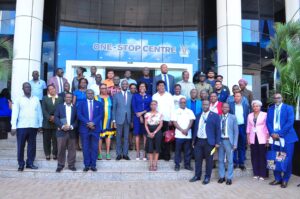
Mukiza encouraged domestic investors to make the most use of the UIA One-Stop Centre for Investors ( www.ebiz.go.ug ), stressing that the Centre, with its 15-plus investment and business agencies, is there to simplify the work of investors.
Mukiza said: “UIA, as a One-Stop Centre, is there to do the running around for you as you focus on investing, adding value to our raw materials, creating products and jobs and contributing to Uganda’s economic growth and development”.

The acting Director of the Domestic Investment Division, Richard Nuwenyesiga, said the division is creating a pool of profiled domestic investors in various sectors who can be matched with international investors, financiers, capacity builders and other investment and business support services.
He added that a key objective of the Uganda Investment Authority is to increase the value of domestic investment from 24.4% to 50% by the end of 2025 by supporting initiatives like business linkages, import substitution, promoting export-oriented industries, and improving SME competitiveness, amongst others.

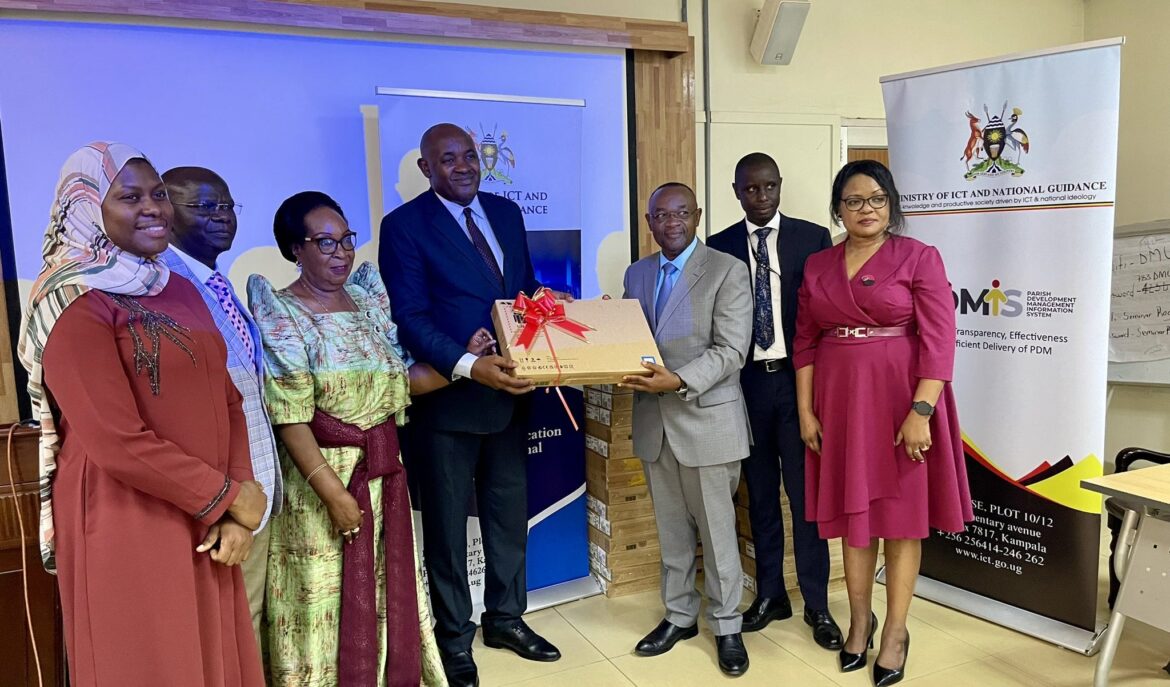
The Minister of ICT and National Guidance, Dr. Chris Baryomunsi has reiterated the Government of Uganda’s commitment to inclusive and sustainable development through the transformative power of technology. Dr. Baryomunsi was speaking at the launch of the laptop distribution exercise for the Parish development Model (PDM), held on May 14, 2024 at the Ministry of ICT and National Guidance offices, Parliament Avenue. The event marked a pivotal moment as the government unveiled its plan to digitize and streamline PDM activities across the country, with the distribution of 163 laptops in the first phase.
“The Parish Development Model stands as a testament to our collective vision for inclusive growth and sustainable development at the grassroots level,” remarked Minister Baryomunsi.
By empowering local government officials to monitor and manage PDM projects effectively, these laptops, earmarked for nationwide distribution, will facilitate Chief Administrative Officers (CAOs) and Town Clerks in ensuring transparent and accountable implementation of PDM initiatives while monitoring the programme’s progress.
“By equipping our local governments with these tools, we are not merely providing hardware; we are investing in capacity building, in bridging the digital divide, and in fostering a culture of excellence in public service delivery,” said Baryomunsi.
Raphael Magyezi, the Minister of Local Government, lauded the partnership between the Ministry of ICT and National Guidance and his Ministry, highlighting the challenges faced by accounting officers in implementing PDM.
“We have been having a problem with data capture, and with these laptops, it should be easy for accounting officers to track the implementation of PDM and the disbursement of funds to the beneficiaries,” expressed Minister Magyezi.
According to the Permanent Secretary of the Ministry of ICT and National Guidance, Dr. Aminah Zawedde, the PDM programme has witnessed significant achievements since the launch of the Parish Development Model Information System (PDMIS) in the Bukedi region on February 26th, 2022.
“To date, PDMIS has registered 22.8 million Ugandans from 7.8 million households, facilitating the operation of 10,594 PDM Savings and Credit Cooperative Organizations
(SACCOs) and 157,006 enterprise groups. This occasion represents the culmination of our endeavours to modernize and enhance the efficiency of the Parish Development Model (PDM) operations,” said Dr. Zawedde.
Dr. Zawedde noted that the distribution of laptops marks a new chapter in the PDM journey by promising to amplify the programme’s impact exponentially. Through digitizing PDM activities, the Ministry aims to revolutionize data collection, analysis, and decision-making processes, thus enhancing the effectiveness and efficiency of development interventions.
However, Dr. Zawedde also emphasized the responsibility that comes with these resources, urging for their judicious and ethical use with a commitment to transparency, accountability, and integrity.
As Uganda embraces this digital revolution, the government reiterates its commitment to harnessing technology as a force for good, empowering communities, fostering innovation, and building a brighter future for all Ugandans.
Emirates partners with Mauritius and Uganda, supporting inbound tourism targets to both nations.
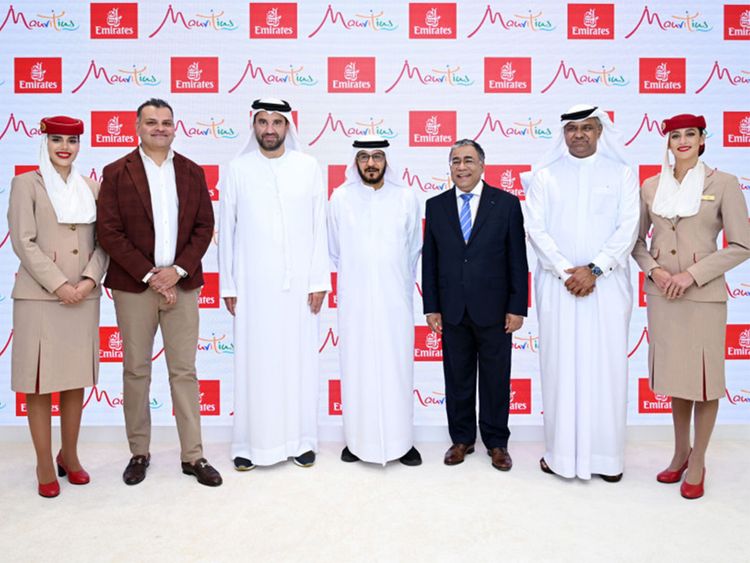
Dubai: Emirates has signed agreements with the Mauritius Tourism Promotion Authority (MTPA) and the Uganda Tourism Board (UTM) on the sidelines of the Arabian Travel Market (ATM).
Emirates pledged its continuous support to the island nation of Mauritius by renewing its partnership with the Mauritius Tourism Promotion Authority.
In an alliance that dates back to 2012, Emirates and MTPA have committed to joint initiatives designed to promote tourism to Mauritius. The airline has been operating there since 2002 and now offers double-daily A380 services.
In 2023, nearly 1.3 million tourist arrivals were recorded for Mauritius, with Emirates playing a vital role in transporting visitors to the island.
Ahmed Khoory, Emirates’ Senior Vice President, Commercial Operations in West Asia & Indian Ocean, said: “Emirates is proud to serve Mauritius since 2002 continuously and to be playing a key role in achieving the country’s tourism targets through our partnership with Mauritius Tourism Promotion Authority. By operating double daily A380 services, we have the capacity to transport up to 1,000 tourists per day into the island, and we hope to continue making a positive impact on the country’s tourism economy.”
Arvind Bundhun, Director, MTPA, said: “We are thrilled about the renewed partnership between Emirates Airline and MTPA. The arrival of Emirates in Mauritius has boosted our tourism sector by opening the Emirati market and allowing us to reach Russia, Eastern Europe, and the Middle East. With Dubai’s hub to nearly 140 destinations, Emirates also provides global connectivity to the island.”
Emirates and the UTM signed a Memorandum of Understanding (MoU) to drive inbound tourism and boost visitors to Uganda, the Pearl of Africa.
Badr Abbas, Emirates Senior Vice President of Commercial Operations for Africa and Lilly Ajarova, said, “Uganda has been a key destination on our global network for over two decades, and one of the most loved in Africa. Through this partnership with the UTM, we are solidifying our commitment to driving international travellers to experience Uganda’s stunning natural landscapes.”
Ms Lilly Ajarova, the UTM CEO, said: “The signing of this MoU is a significant milestone in promoting Uganda, also affectionately known as the Pearl of Africa, as a competitive tourism destination. The UTM is excited to partner with Emirates to benefit from its worldwide network and attract tourists to Uganda.”
Under the MoU, Emirates will identify critical markets to promote Uganda as a favourable tourism destination and encourage travellers to experience its abundant natural, cultural and adventure attractions. The UTM will work closely with the airline to develop programmes for trade partners, hoteliers, and tour operators to market and stimulate the industry.