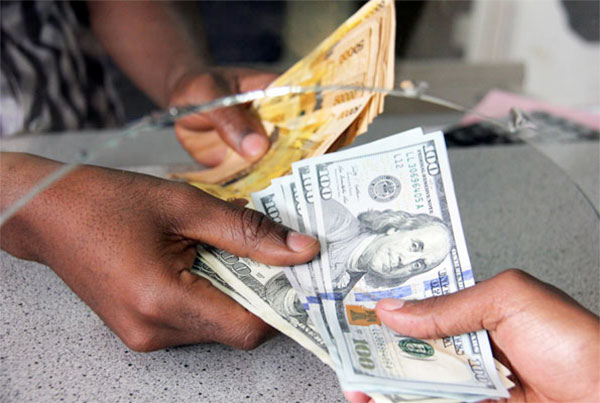
The local unit was relatively weak during the week, with dollar demand from offshore investors, energy and manufacturing firms outstripping existing supply from commodity exporters and remittance firms.
Other News
Stanbic Bank Uganda to provide full financing for Ugandans seeking to purchase residential houses
Ugandans hoping to live under their own roof and end renting have a new opportunity to do so with 100% financing from Stanbic Bank, courtesy of a new lending campaign dubbed “Oli Sorted” launched last week.
The 90-day campaign which targets the back-to-school season also enabled parents to borrow up to Shs 350 million in unsecured personal loans from Stanbic Bank, to support them pay school fees and other attendant expenses.
Speaking to the media this morning, Israel Arinaitwe, the head of Personal Banking at Stanbic Bank said the campaign is a timely response to address the needs of customers who require financing different aspirations in life.
“We are simply responding to what we hear and see from the feedback of our customers—they are tired of renting, they want to get more money, but they also want longer repayment tenures; so, we are responding in the affirmative through this campaign,” said Arinaitwe.
The campaign also covers the needs of business customers—those owning small and medium enterprises and seeking capital to restock or expand, according to Aaron Akampa, the head of Enterprise Banking at Stanbic Bank.
“Small and medium enterprises are the lifeblood of our economy—they employ millions and support the livelihoods of thousands of Ugandans. And they have been asking us to do more for and with them—they want access to quicker credit, they want to borrow at lower rates and safer options from moneylenders—Oli Sorted campaign is our response, and we invite all small businesses across the country to
visit any of our branches to get more information on how we can support them to grow their businesses,” said Akampa.
Both retail and business customers seeking credit in the next 90 days will benefit from the promotion offer of zero arrangement fees which means they get exactly what they apply for, without losing money in form of administrative processing fees often charged by banks.
“First of all, we are increasing the given under the previous campaign, to Shs 350 million in unsecured loans—we will not charge arrangement fees, and our decision will be given within 48hrs ensuring that no time is wasted,” said Salim Kitagenda, the head of Products at Stanbic Bank.
Kitagenda said while the Oli Sorted campaign targets Ugandans banking with Stanbic, customers currently working with other banks can be assisted to quickly open accounts with Stanbic and even transfer any loans with other banks and get to benefit from attractive offers.
SCHOOLS ARE SORTED
The campaign also targets schools— with parents who pay school fees through Stanbic agents and other channels such as FlexiPay standing a chance to win back up to Shs 500, 000 in cash back. Agents who process the most school fees payment transactions will also stand a chance to have their rent by the bank.
School administrators can also secure up to Shs 3 billion in operating capital to restock or construct new premises. Albert Yiga, the head of Education Sector Banking, said the campaign also comes with a variety of rewards for head teachers, bursars, school directors, parents, and teachers and Stanbic Agents.
The Cash-Back campaign has three broad brackets with rewards of insurance cover, school fees and rent refunds for agents. During the campaign, 45 schools will be awarded with insurance policies, numbering 90 in total.
“During the campaign, a total of 120 parents or students are potential winners. All they need to do is pay school fees through Stanbic platforms specifically FlexiPay, Schoolpay or through Stanbic agents to be considered eligible,” said Yiga.
In Category One (the top tier), schools that grow from the previous cycle average monthly collections by average balances of Shs 500 million (an equivalent of at least Shs 1.8 billion in collections) will win three policies (Head Teacher, School Director, and School Bursar.)
Uganda Development Bank Emerges Best Bank of the Year at East Africa Awards.
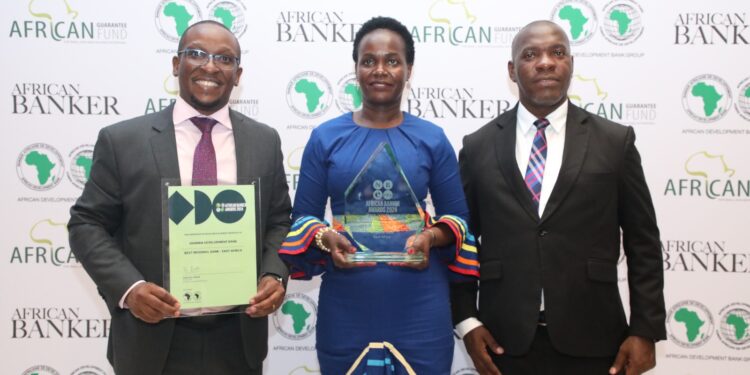
Uganda Development Bank (UDB), the country’s national Development Finance Institution, was on Wednesday named the Regional Bank of the Year – East Africa at the Annual African Banker Awards.
Now in its 18th edition, the prestigious African Banker Awards celebrate the achievements of individuals and institutions that have contributed significantly to the growth and development of Africa’s banking sector over the past year. This year’s awards ceremony in particular saw Development Finance Institutions (DFIs) triumph. They emerged as the stars of the show in both institutional and individual recognition categories, underscoring their integral role in the African financial ecosystem.
According to the event organizers, the judges awarded UDB ‘Regional Bank of the Year – East Africa’ because it showed leadership in every category required of a hugely progressive development bank, making significant contributions in uplifting the lives of Ugandans whilst weathering extreme external shocks, and extending socially and economically supportive lending that improved institutional reach and performance – yet still put powerful green and sustainability strategies at its heart.
“We are honored to receive this coveted Award, particularly considering the high-caliber recipients who have received it in the past. Being named Regional Bank of the Year – East Africa is a testament to hard work, dedication, and resolve to not only accelerate financial inclusion in the country but also facilitate Uganda’s socio-economic transformation,” Ms Patricia Ojangole, the Managing Director of UDB said at the Award Ceremony that was held in Nairobi, Kenya.
This Award is given to a bank operating either across a specific region or in one country within a region (North, East, South, West, or Central Africa). The winner will have excelled in the banking industry in the region by reaching out to new customer segments, offering innovative products and services, adopting inclusiveness by bringing the unbanked into the banking space, making use of new technologies, and contributing to a stronger financial sector.
UDB also received a Silver Award (A+ rating, under the category of Best Performing DFI) for adhering to the strict prudential guidelines of the Association of African Development Finance Institutions (AADFI), which assess operational efficiency, governance systems, development impact, and overall institutional sustainability, amongst African DFIs. UDB was one of only five institutions on the continent rated A+ and above.
“An A+ rating by AADFi reflects the Bank’s commitment to excellence and its dedication to promoting sustainable socio-economic development in Uganda. The Bank has demonstrated its strong commitment to meeting the highest standards of performance. We’re excited for 2024 and beyond, with our endeavors inspired by innovation and our commitment to excellence,” Ms Ojangole said while receiving the Award earlier in the day.
The Association of African Development Finance Institutions (AADFI) Peer Review is a rigorous evaluation process that assesses the performance of African DFIs against the Performance Standards for Green and Inclusive Recovery-oriented Services (PSGRS). UDB was assessed on key areas such as governance, risk management, financial management, and impact assessment, among others.
UDB has embraced a holistic sustainability approach, undergoing a comprehensive review of its operations. The Awards come as an authentication of the Bank’s critical role in enhancing the country’s development agenda in alignment with the government priorities.
“I take this opportunity to thank the government, Board, Management, and staff of UDB for their unwavering commitment towards the growth and success of the Bank,” Ms Ojangole concluded.
Uganda Development Bank Limited (UDB) is the country’s national Development Finance Institution (DFI) with a mandate to accelerate socio-economic development in the country through sustainable financial interventions, both debt and equity. UDB also offers non-financial services including business advisory and project preparation geared at fostering investment readiness in enterprises. Consistent with this mandate, the Bank supports projects within the private sector that demonstrate the potential to deliver high socio-economic value, in terms of job creation, improved production output, tax contribution, and foreign exchange generation, among other outcomes. These projects fall within the key priority sectors of our economy and are in line with Uganda’s development priorities.
UDB aligns its priority sectors with the National Development Plan III (NDP III), focusing on Agriculture, Industry (to include agro-industrialization, manufacturing, knowledge-based industries, and extractives), and Services (health, tourism, and hospitality, education, science, technology, and innovation) and Infrastructure. Agriculture, agro-industry, and manufacturing constitute about 75% of the Bank’s portfolio in alignment with the government focus under NDP III and Vision 2040.
PM NABBANJA URGES UTILITY PROVIDERS TO SPEED UP RELOCATIONS FOR KAMPALA ROADS
Prime Minister Rt Hon Robinah Nabbanja has issued a stern directive to utility service providers, urging them to expedite the relocation of service lines to ensure the timely completion of vital road construction projects in Kampala
During her Thursday tour, Nabbanja inspected the Kyebando Ring Road in Kawempe Division, as well as 7th Street and 8th Street, identifying critical issues such as right-of-way acquisition and delayed service line relocations as major bottlenecks.
These are some of the roads being constructed under the Kampala City Roads Rehabilitation Project (KCRRP).
Nabbanja called on key utility providers, including Umeme, National Information Technology Authority (NITA-U), National Water and Sewerage Corporation (NWSC), and the Police, to enhance their coordination and speed up the shifting of service lines to prevent further delays.
Expressing frustration with the current pace of progress, Nabbanja demanded immediate action from contractors and consultants.
“Let the contractor start work; we are tired of potholes,” she declared, pledging to closely monitor the situation. “I’m going to start passing here every day. If there are any problems, I want to know about them immediately.”
Highlighting her determination to ensure efficient project completion, Nabbanja announced plans to engage the Ambassador of China.
She criticized the apparent negligence of the consultants, stating, “We feel there is negligence on the side of the consultant. We are tired. We don’t want to waste even one minute. People are suffering.”
Stressing the importance of timely and high-quality execution, Nabbanja warned against any form of sabotage to government efforts.
“When we are given work, let us deliver it. Don’t sabotage government. We want to serve our people. We need quality work and quality roads,” she emphasized.
Following her inspections, Nabbanja convened a meeting with contractors, consultant utility service providers and the Kampala Capital City Authority (KCCA) to address the challenges hindering road construction.
Government Chief Whip Hamson Obua who had accompanied the Prime Minister during the road tours attended the meeting echoed her concerns, proposing subcontracting as a solution to accelerate the work.
“For us, we want to see Kampala roads in good shape. Why don’t you subcontract more so that work moves fast?” he suggested.
The tour and meeting also included the Minister of Kampala Capital City and Metropolitan Affairs, Hajjat Minsa Kabanda, and the State Minister for Kampala, Kabuye Kyofatogabye who acknowledged that the current pace of execution is a significant challenge.
The KCCA Executive Director Dorothy Kisaka, her Deputy Eng David Luyimbazi were also part of the road tours.
MTN Uganda has launched a secondary market sale of up to 1,574,807,373 ordinary shares, starting on May 27, 2024, and concluding on June 10, 2024.
Managed by SBG Securities Uganda Limited, the offer is priced at Shs170 per share, with a minimum application of 1,400 shares and increments of 420 shares.
This initiative aims to increase Ugandan ownership and comply with national regulations.
“This offer presents a significant opportunity for Ugandan retail and professional investors, including our loyal customers, to own a stake in MTN Uganda and participate in our future growth,” stated Sylvia Mulinge, chief executive of MTN Uganda.
“This initiative supports our strategic goals and aligns with national telecommunications and broadband policies.” she added
MTN Uganda was listed on the Main Investment Market Segment of the Uganda Securities Exchange (USE) on December 6, 2021, following an initial public offer (IPO).
The current offer, representing a 7.03 percent stake in the company, aligns with MTN Group and MTN Uganda’s goal to broaden Ugandan shareholding.
It also fulfills the requirements of the national telecommunications operator license, the National Broadband Policy 2018, and regulations by the Uganda Communications Commission.
To encourage participation, MTN Uganda offers an incentive: for every 140 shares purchased, 30 additional shares will be transferred at no cost.
Professional investors must hold their shares for six months to maintain market stability.
Investors need a Securities Central Depository (SCD) account to participate, and applications can be made electronically via the USE Easy-Portal or physically through licensed stockbrokers.
In case of oversubscription, priority will be given to Ugandan and East African retail investors.
To facilitate this offer, trading in MTN Uganda shares will be suspended from May 27, 2024, to June 12, 2024.
MTN Uganda is also focused on its Ambition 2025 strategy, which aims to build the largest and most valuable platform business in Africa.
This includes the separation and consolidation of its financial technology and infrastructure businesses.
At the annual general meeting on May 22, 2024, MTN Uganda declared a final dividend of Shs6.4 per share, payable on June 25, 2024, to shareholders registered by June 12, 2024.
“Our Ambition 2025 strategy will drive value for our shareholders and foster greater investor engagement,” emphasized Mulinge.
“We are committed to ensuring equitable treatment of all shareholders through transparent and strategic initiatives.”
This secondary market sale presents a unique opportunity for Ugandan investors to engage with MTN Uganda’s growth and strategic direction.
Bank of Uganda (BOU) has allayed fears that some banks in the country are at risk of failing due to the recent tightening of regulatory requirements, saying that currently, all regulated financial institutions are stable.
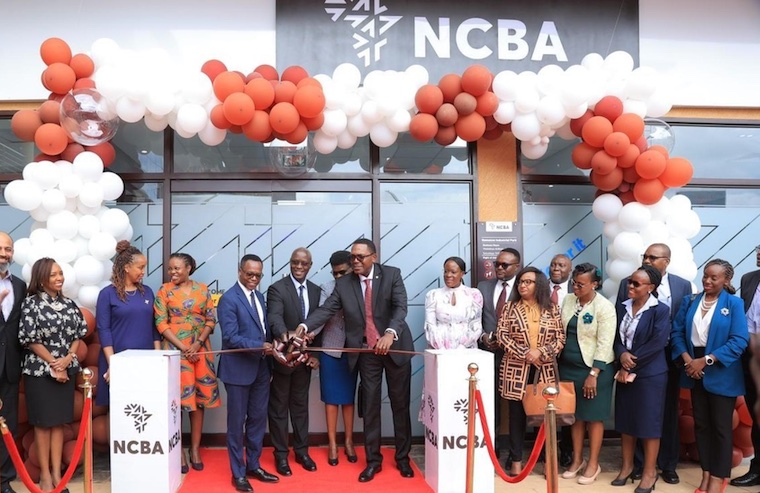
Speaking at the opening of NCBA bank’s fifth branch in the country at Namanve Industrial and Business Park, Hannington Wasswa, director of commercial banking at BOU, said the regulatory regime was reformed to make the industry stronger, having learned from the effects of previous shocks.
There have recently been fears that some institutions might close down or be acquired mainly due to the increase in minimum capital requirements, and stricter vetting of top management personnel of banks. Wasswa hailed NCBA Uganda for its high levels of compliance with the requirements that have seen it grow its presence and performance fast.
He encouraged the industry customers to always look out for new developments in the regulatory regime and take advantage of the financial literacy programs offered by BOU to make informed decisions to avoid making losses or consuming hazardous products.
The bank has a presence around East Africa with a total of 141 branches and an asset base of Shs 1.2 trillion, making it one of the biggest in the region. Wasswa hailed the company’s innovativeness and ability to adapt quickly to changes in the business environment, including introducing services and products that respond to customer requirements.
NCBA Group managing director, John Gachora, warned that the global banking industry was operating in an increasingly hard environment, especially due to geopolitical developments and politics in some major countries.
He expressed uncertainties over the outcome of the US elections which, having featured the same candidates in a violent post-election period four years ago, could have worse effects on the economy than then. There are also oncoming elections in the UK, but the other major risks come from the persistent and potentially more explosive conflicts in Eastern Europe and the Middle East.
However, in the coming elections in East Africa, including in Uganda in two years, Wasswa expressed confidence in minimum effects on the business environment. Wasswa admitted that there is a risk to the business environment coming from geopolitics and well as the growing threat of cyber security, among others.
He urged the banks to ensure they remain above these by continuously upgrading the operational and security systems but also to keep the customers informed of new developments. NCBA Uganda made a profit after tax of Shs 28 billion last year, which the Bank of Uganda and the bank’s board have hailed as commendable, being a fairly new player in Uganda.
Mark Muyobo, NCBA Uganda managing director said they chose to open a branch in Namanve after realizing that the place, both the industrial park and the surrounding community were quite underserved. But, he added, that the bank’s core business includes industrial banking and asset financing, which are a key aspect of the manufacturing industry.
While the traditional banking hall is disappearing as digital and online banking takes over, Muyobo said theirs is a hybrid one that offers all the modern digital banking services, in addition to platforms like agency banking that give them a presence in all areas.
Uganda Revenue Authority (URA) waives EFRIS penalties to support business compliance.
The Uganda Revenue Authority (URA) has waived penalties related to the electronic fiscal receipting and invoicing solution (EFRIS).
This system, designed to ensure all business transactions are recorded and reported electronically to the tax authority, faced significant backlash from traders.
The decision to waive penalties follows an April 2024 directive from President Yoweri Museveni, who responded to traders’ protests citing high costs and operational difficulties with EFRIS.
During a meeting with traders at the URA headquarters in Kampala, URA Commissioner General John Musinguzi acknowledged the premature penalties.
“We are using technology to mobilize revenue, but adopting to the new change was harsh and challenging for taxpayers. We rushed to penalize them before they understood the EFRIS technology. The penalty was issued without sufficient knowledge; therefore, we did it in error,” Musinguzi admitted.
Musinguzi expressed optimism that the penalty waiver would facilitate easier filing of returns and better compliance with EFRIS requirements in the future.
Traders welcomed the waiver but voiced concerns over the 18% value-added tax (VAT) and the Shs 150 million threshold for compliance.
“URA should increase the threshold amount from Shs 150 million to at least one billion,” said Edward Ntale, Chairperson of the United Arcaders and Traders Entrepreneurs Association (UATEA).
“Small businesses with low sales and profits need relief. Selling Shs 410,000 every day might leave you with less than Shs 10,000 in profits.”
Ntale also criticized the 18% VAT as unfair to micro, small, and medium enterprises (MSMEs).
“The current VAT rate is not just for MSMEs, who struggle with low margins,” he added.
In recognition of their efforts to adapt to the EFRIS system, URA awarded certificates to penalty waiver beneficiaries, encouraging them to continue their compliance journey.
E-Fraud still a challenge but banking sector is on a roll – Julius Kakeeto.
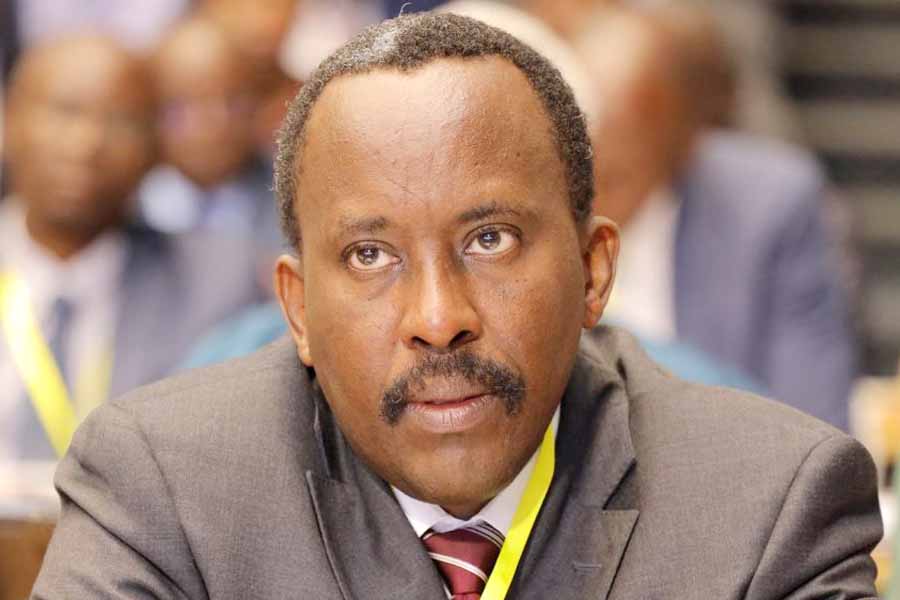
BANKING | The newly elected chairperson of Uganda Bankers’ Association (UBA), Mr Julius Kakeeto, says e-Fraud is one of the major challenges in the banking sector that he believes is on a roll.
At least two local banks have filed e-Fraud cases with Police in the last few months in a banking industry that works with numerous third parties to deliver services.
“If any link in the chain is weak, it can be exploited to occasion a fraud,” Mr Kakeeto says.
The Managing Director of Post Bank says e-Fraud is also manifesting because of limited awareness among the population where they give unknowingly away their own access and security credentials.
And now that he is in a seat where one of his roles will be to devise policies the sector can work with, Mr Kakeeto’s work seems cut out.
“So there is still plenty of work to do in order to curb e-Fraud,” he says.
Mr Kakeeto was last week elected to succeed Citibank’s Sarah Arapta in the bankers’ top seat having served as her deputy prior to.
Uganda Bankers Association is an umbrella organisation for financial institutions licensed and supervised by Bank of Uganda.
While e-Fraud is one thing that bankers keep looking over their shoulders for, one of those they face head-on is the challenge of growing a large base of good borrowers.
Mr Kakeeto says this is one area they must continue working on collectively.
“Credit expansion thrives in an environment of ability and willingness to pay back what you borrow,” he says. “A good credit culture spurs credit growth.”
The industry is also faced with high operational costs or overheads as result of overall high cost of doing business manifested in many ways like delay in settlement of arrears, or delay in disposal of litigation cases or poor infrastructure limiting accessibility.
“Additionally, today we are all faced with climate related challenges,” Kakeeto says. “In the banking sector, climate challenges expose credit portfolio to various risks.”
Kakeeto and his executive of Michael Mugabi, Edgar Byamah, Mumba Kalifungwa, Sanjay Rughani, Patricia Ojangole, Shafi Nambobi, and secretary Wilbrod Owor will attempt to steer the banking sector against the headwinds with one eye on the positives that they must not only sustain but also grow.
The banking sector is at the forefront of supporting several pillars of the economy that are detailed in the National Development Plan III – including boosting exports and import substitution, development in transport and energy, as well as tourism.
The banking industry appears stable and resilient and the Supervised Financial Institutions with Tiers I, II and III have only recently published their first quarter financial performance that reflects overall growth of the industry.
Total assets for the SFI industry have grown by 7.5 percent from Shs45.8 trillion to Shs49.5 trillion, while non performing loan ratio reduced from 5.3 percent in 2022 to 4.6 percent as at December 2023.
Aggregate industry profitability also grew from Shs1.2 trillion recorded in 2022 to Shs1.4 trillion in 2023.
“There is continued investment in ICT and delivery channels especially digital channels,” he says.
The industry nearly doubled spend in ICT at Shs694 billion in 2023 compared to Shs392 billion in 2022.
In a sector that is increasingly being driven by advancement in technology and one where banks have to reinvent to compete against several financial digital technologies, investment in ICT will likely continue to define Mr Kakeeto’s executive.
The banking sector will have to do so with eye on opportunities beyond the conventional clients such a huge unbanked population that remains in the economy and businesses such as in the SME sector that present numerous unsatisfied needs.
But of more interest for the sector could be opportunities opening up in line with the growth of the economy in areas such as oil and gas, construction and real estate, agro-processing and manufacturing, and infrastructure development.
Kakeeto says even the services Industry is really growing by leaps and bounds, citing hospitality, health, education and ICT services.
“The industry is well positioned to harness these opportunities arising from the increased levels of capitalisation coupled with the digitisation,” he says.
The new executive will also seek to ensure that the banking sector pushes ahead with facilitating trade through foreign correspondent banking relationships.
“We are living in an era where business sustainability is a priority. The newly elected executive will prioritise embracing the environmental, social and governance framework as this enhances the sector’s responsibility to society, its customers, and stakeholders,” Mr Kakeeto says.
The seasoned banker has been the managing director and chief executive officer of Post Bank Uganda since November 2019.
Before that, from 2015 until 2019, he was the managing director and CEO of to I&M Bank Uganda (formerly Orient Bank).
Before joining I&M, he served as the Finance Director at Equity Bank (Uganda).
Since his appointment at Post Bank, he has led a restructuring process to reorganise the operations of the bank, resulting in the central bank granting PostBank with a Class 1 licence that allows it to operate as a fully fledged Tier 1 commercial bank.
Kakeeto holds a Master of Business Administration degree from Manchester Business School in the United Kingdom.
He is a Fellow of the Association of Chartered Certified Accountants (FCCA) of the United Kingdom, as well as the Institute of Certified Public Accountants of Uganda (ICPAU).
“Our banking sector has a lot to offer to drive economic growth and prosperity in Uganda and I am eager to contribute to it,” Kakeeto said of his election.
Experts urge authorities to unlock financial and regulatory opportunities to drive growth
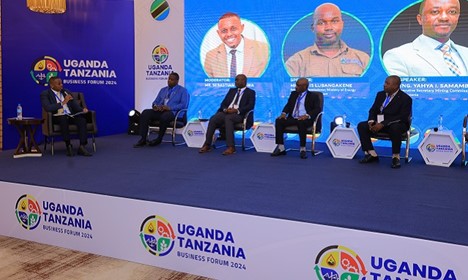
Dar es Salaam, Tanzania Uganda and Tanzania’s public and private sectors must address gaps in mining activities to create opportunities aligned with their development plans.
Speaking at the 2nd Uganda-Tanzania Business Forum, held in Dar es Salaam from May 23-24, Sebastian Kolowa, who moderated the panel discussion on the mining industry value chain, said both nations are emerging economies with significant potential for revenue generation, industrial development, and socio-economic transformation through the mining sector.
“Despite the potential benefits, the mining industry in Uganda and Tanzania faces various challenges, including regulatory uncertainties, infrastructure deficits, environmental concerns, and access to finance,” Kolowa said.
Addressing these challenges, he said, requires collaboration among governments, the private sector, and civil society to foster an environment conducive to responsible and sustainable mining practices.
Humphrey Asiimwe, the Chief Executive Officer of the Uganda Chamber of Mines and Petroleum, underscored the importance of learning from Tanzania’s advanced mining sector, particularly its success in growing the artisanal mining sector and improving market access for artisanal miners.
He noted that Uganda’s recent passage of the Minerals and Mining Act of 2022, which recognizes the role of artisanal miners, was inspired by Tanzania.
Currently, Tanzania’s mining sector contributes 9% to its GDP while Uganda’s contribution remains at a steady 2%.
Asiimwe encouraged Tanzanian mining companies to explore investment opportunities in Uganda, emphasizing that geology knows no boundaries. He also stressed the importance of maintaining a stable investment environment and urged governments to play a crucial role in creating an attractive investment climate.
“There is a need for boosting livelihoods rather than providing handouts. Mining companies should engage in corporate social responsibility initiatives as a social license to operate in communities,” Asiimwe said.
He noted that while Uganda faces challenges in mining skills, these skills exist in Tanzania and can be shared through chambers of mines and other collaborative spaces.
Benjamin Mchwampaka, the Executive Secretary of the Tanzania Chamber of Mines, highlighted Tanzania’s success in refining gold, noting the presence of two gold refineries.
He revealed the Tanzanian government’s interest in purchasing a $400 million malt metal machine to add value to raw materials, enhancing the quality of the output.
Mchwampaka pointed out that Tanzania’s mining sector contributed 19% to GDP last year, with gold exports accounting for 56.9%. He emphasized the importance of mapping and collecting geological data on the abundant minerals in Uganda and Tanzania, including gold, coal, and more.
Mchwampaka also underscored the need to focus on large-scale mining rather than small-scale operations and proposed the establishment of geological centers in various districts to support this initiative.
Emphasis on value addition
Chris Lubangakene, the Assistant Commissioner at the Ministry of Energy and Mineral Development in Uganda, emphasized the government’s bold move to encourage value addition to mineral resources, citing mineral value chains as crucial for economic development.
He highlighted Tanzania’s successful strategies in gold mining as a learning opportunity for other African countries, including Uganda. Lubangakene stressed that Uganda aims to invest in data management for the mining sector, emphasizing the importance of accurate data in monitoring mineral contracts and attracting investment.
He advocated for national participation in the sector through mining cooperatives to ensure that local communities benefit from mining activities. “In terms of local content in gold mining, 30% of services are accorded to the gold mining sector of Uganda,” Lubangakene said.
He added that the two countries could cooperate in developing ongoing mining projects in Uganda, such as the phosphate and graphite projects, which are critical in reducing dependence on mineral imports and promoting local economic development.
Henry Zephaniah from the Tanzania Mining Commission provided insights on involving local communities in the mining sector through effective mineral policies and legal frameworks.
He emphasized the importance of the social license to operate, which involves investors engaging with communities to reach common ground and offer incentives such as compensation.
He also highlighted the need for investors to cooperate with local governments to ensure communities understand their roles and expectations in mining projects. He stressed the importance of a memorandum of understanding (MoU) as a key requirement for successful cooperation.
TotalEnergies EP Uganda reaffirms commitment to creating opportunities for Ugandan youths.
French oil company, TotalEnergies EP Uganda has reaffirmed its commitment to creating more opportunities for young people in Uganda to continue making meaningful contributions in their communities.
The commitment was made during the company’s commemoration of its over 10 years of youth inclusion and education initiatives in Uganda.
Since the start of its operations in 2012, TotalEnergies EP Uganda has implemented various youth initiatives that have contributed to Uganda’s skills and labour pool as well as Government of Uganda’s education sector goals for capacity building and knowledge transfer.
The initiatives are in line with the company’s corporate social responsibility pillar of youth inclusion and education’ and the UN Sustainable Development Goal (SDG) 4 on Quality Education.
Speaking at the event which convened over 200 beneficiaries, Philippe Groueix , the General Manager, TotalEnergies EP Uganda noted that the company will continue supporting youths .
“With our deep-rooted existence in Uganda, our goal is to create shared value. As such, we firmly believe that empowering the youth to play an active role in their communities contributes greatly to this goal. We are therefore
pleased that many of our nearly 3,000 youth and education program beneficiaries are contributing tremendously to the country’s development by deploying their professional and technical skills in Uganda’s diverse sectors like the multi-energy industry, health, telecommunications, among others,” Groueix said.
“We are privileged to have the opportunity to create possibilities for young people to succeed, and as a tribute to them, we are launching a campaign that will spotlight some of the young people with whom we have walked this journey and will share the various contributions they are making to their communities, and country.”
TotalEnergies EP Uganda has implemented several youth empowerment initiatives to include an Ordinary and Advanced Level scholarship program targeting scholars from the Tilenga project districts, internship and graduate trainee programs, vocational training and certification, international postgraduate scholarships, Tilenga Academy Training program, and various collaborations with academic institutions to enhance knowledge transfer.
The company has also facilitated the training of over 250 government of Uganda officials in various disciplines.