

A renewable energy firm is set to address part of the garbage crisis in the Kampala Metropolitan Area, showing significant progress and capacity, but sluggish government action has left the project stalled.
The Mukono-based Ddundu Waste-to-Energy Project, a partnership between RIC Energy and Kampala Capital City Authority (KCCA), aims to generate 20 megawatts (MW) of electricity by converting municipal solid waste into energy.
This landmark project is expected to tackle Kampala’s escalating waste management issues, increase Uganda’s power capacity, and improve environmental standards.
RIC Energy recently wrote to President Museveni, requesting his executive powers to expedite the project. In a letter dated September 27, the firm informed the President that, despite substantial preliminary work and over $2 million (approximately Shs12 billion) invested, final binding agreements are needed to proceed.
“In order to expedite the implementation of the project, we have remained committed and taken all necessary steps, including engaging all requisite resources, to move ahead with implementation as soon as possible,” the firm stated.
“We humbly look forward to your further directive and remain committed to investing in and constructing the proposed waste-to-energy plant in the shortest possible time.”
Founded in Spain in 2005, RIC Energy has become a global renewable energy leader, specialising in solar photovoltaic (PV) and renewable energy projects. With over 19,000MW in renewable energy projects, including solar PV, green hydrogen, biogas, wind, and waste-to-energy, RIC Energy has established itself as an industry innovator.
President Museveni has been a proponent of clean energy solutions for some time. In a November 1, 2023 letter, he noted that he had approved KCCA’s plan to commence a solid waste management project for Kampala City and the metropolitan area back in 2013.
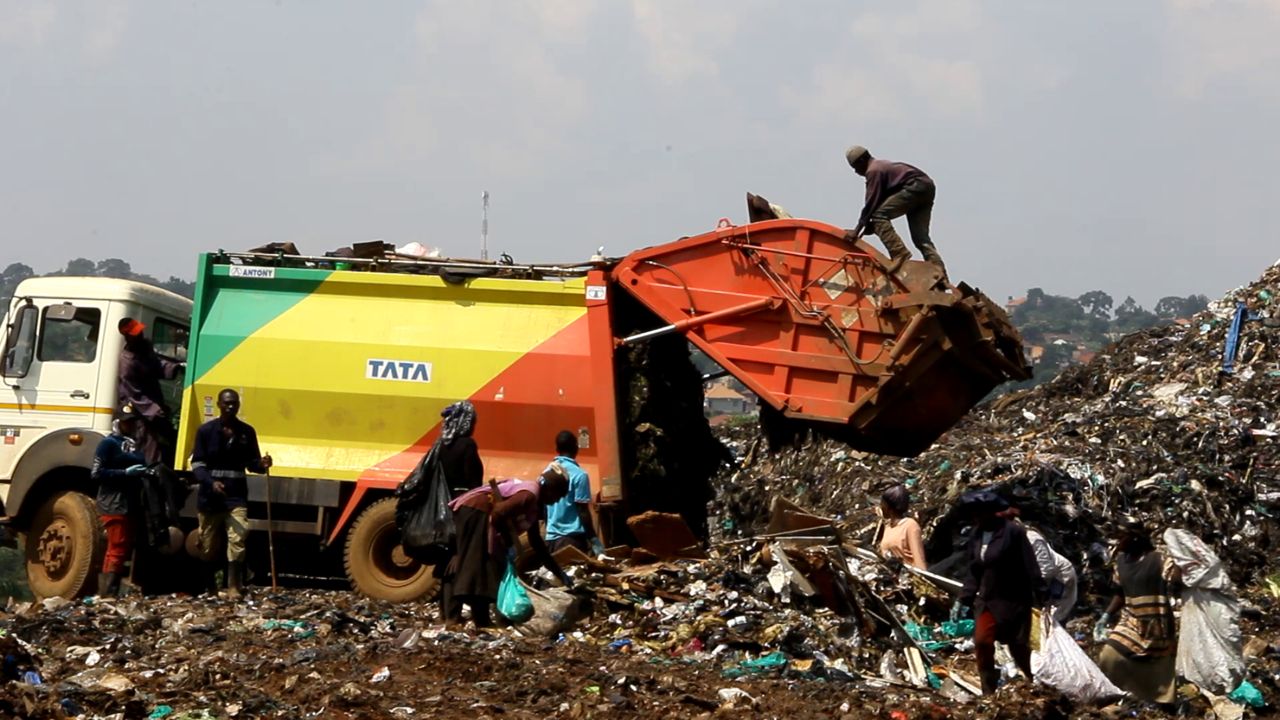 KCCA is facing a garbage disposal crisis.
He directed KCCA to expedite the project and the Ministry of Energy and Electricity Regulatory Authority (ERA) to provide the necessary licensing.
While the President authorized KCCA to manage energy tariffs, RIC Energy encountered obstacles when it was discovered that KCCA lacks the authority to execute all commercial terms.
The firm had submitted a draft MoU to KCCA after an October 19, 2023 meeting with all stakeholders, including ministers for Kampala and energy.
“We were advised that all the commercial terms cannot be agreed upon by KCCA on behalf of other authorities and that a project agreement will be executed subsequently with all stakeholders involved,” RIC Energy informed the President.
In response, the company executed an MoU with KCCA on December 22, 2023, to conduct final technical assessments to ensure readiness for implementation, including the preparation of draft agreements over the following 12 months.
Long Overdue Solution
The Kiteezi landfill disaster in August left Kampala and the surrounding area struggling with mounting garbage, as KCCA was overwhelmed with waste and faced limited disposal options.
Data from the Kampala Waste Management Report for 2023 indicates that the city generates between 2,000 and 2,500 tons of waste daily but can only collect and dispose of 1,300 to 1,500 tons per day, leaving around 50 percent uncollected or improperly disposed of.
Waste-to-energy projects like RIC Energy’s could mitigate the waste crisis and add 20MW to Uganda’s national grid. Such efforts are particularly critical in Africa, where the World Economic Forum noted in 2021 that the continent’s energy generation capacity (excluding South Africa) was only 28 Gigawatts—comparable to Argentina’s.
In Ethiopia, a tragedy at the Koshe dump site prompted action, transforming the area into a waste-to-energy plant that now incinerates over 1,400 tonnes of waste daily.
The plant supplies 30 percent of Addis Ababa’s household electricity needs while meeting European emissions standards.
Egypt is following suit with the Abu Rawash facility, a $120 million project that will handle 1,200 tonnes of waste daily, generating 30MW to support the country’s climate change goals.
RIC Energy’s Ddundu project would not be Uganda’s first clean energy initiative. In 2019, President Museveni commissioned a 24MW solar photovoltaic plant in Kabulasoke, also developed by RIC Energy, located in Gomba District.
RIC Energy on the Move
 RIC Energy, operating across four continents and more than 20 countries, began its Africa operations in Uganda in 2017, signing an EPC contract for a 23MWp Solar PV Plant in Kabulasoke.
The firm also co-developed a 23MWp solar park in Nkonge, Mubende, Uganda’s first solar PV plant with tracker technology.
“Having successfully completed two of the largest solar PV plants in Uganda, we have gained insight into Uganda’s energy market and its challenges with municipal waste management,” said Rajesh Chugh, RIC Energy’s director for Africa and Asia.
For the Ddundu project, RIC Energy seeks key agreements, including waste supply and land lease arrangements, as well as a permit from ERA. “The technology proposed has no risk of failure, aligns with the composition of waste in Kampala, is immediately deployable, and meets EU emission standards,” Chugh said.
Compared to current disposal practices, which are environmentally harmful, unsafe, and detrimental to public health, RIC Energy’s project promises substantial environmental and public health benefits.
The firm has proposed a rate of 15 US cents per kilowatt-hour—a competitive rate.
Umeme, Uganda’s main power distributor, currently buys electricity at an average of Shs290 per kWh and sells to customers at around Shs504 per kWh.
The municipal waste-to-energy rate is distinct due to the unique dynamics, investment, and costs associated with waste-based energy production.
“What’s needed is urgent action. This is not just about the cost per kilowatt-hour; it’s about saving lives and ensuring a better, healthier environment for Ugandans,” said Chugh.
There have been recent developments: On October 4, ERA placed a notice for objections regarding VIDA Energy, a subsidiary of RIC Energy, and its application for a licence to generate and sell electricity from waste.
VIDA Energy intends to conduct detailed feasibility studies for the Ddundu Waste-to-Energy Power Project and feed its generated power into the national grid.
The deadline for objections is November 4.
With the Kiteezi disaster underscoring the urgency, the case for a swift rollout of the Ddundu project has never been more compelling.
